Wednesday, June 21, 2023

Using your electrical devices in Europe

Travel and Leisure

Yep. The writers' strike is still going on. So what to write about today? I just gave my brother two of my NA to EU plug adapters for his first trip to Europe, and this is a hot topic of confusion for many first-time travellers across the Atlantic, so here goes. Disclaimer: While I am/was an electrical engineer, please do your own due diligence with respect to using electrical devices in Europe.

The first thing that you should do, is take a mental inventory of anything electrical that you will want to bring abroad. Our list is something like this:

  • 2 x iPads
  • 2 x iPhones
  • 1 x power bank
  • 1 x bluetooth speaker
  • 1 x pair bluetooth earbuds (for RS Audio Tours)
  • 1 x hair straightening iron
Once you've figured out what you will need electricity for, turn each device over (or the power adapter for each) and try to read the tiny writing on the side. I use the device pictured above for the first five items on my list (it has three USB charging ports), and it reads "Input: 100V-240VAC 50/60Hz".
So for this USB charger (and likely any device like it), you are good to handle the EU power system of 220V and 50 Hz, and you simply need to "adapt" the NA flat prongs to the local outlets. While most EU countries use a round, recessed socket, the Swiss use a hexagonal one. That's why I recommend getting ones that fit the Swiss one, as they also fit the round ones too. These ones on Amazon 2 for $6 should do the trick.

With North American hair appliances, you do actually need to "convert" the power. This is where it gets tricky. I'll start off by saying that you can leave your fancy Dyson hair dryer at home. Europeans have hair dryers too, and we've never run into a situation where there wasn't one in the hotel room or Airbnb. But for curling irons and hair straighteners, I had purchased a converter that I thought would be appropriate for these high current devices (pictured). While it did supply power to her flat iron, it didn't quite heat up properly, and only got slightly better than warm. Based on this experience, I don't recommend trying to buy one of these power converters.
However, if you are going to go this route, beware that many of the $20 ones listed on Amazon don't actually perform any voltage conversion, despite showing a picture of a North American-style outlet, and the word "converter" used in the description. If you read the fine print carefully, you'll see notes like, "NOT a Voltage Converter: This travel converter for Europe only works on 100V to 250V voltage devices". Plug your beloved hair straightener into one of these, and you're going to quickly create a fire hazard. There are more expensive ($40+) ones I have seen on Amazon that indicate support for 2000W, but when you read the description, it states the rating is not for the 110V "converted" socket. Confused? You should be.
My recommendation for anyone that wants/needs to curl or straighten their hair in Europe, is to buy a dual-voltage model. She ended up buying this one on Amazon for less than $30, and indicated that it's as good as the NA power-only one she uses at home. 

The other device that I can think of that people might need while travelling is a CPAP machine. I can't guarantee it, but it would seem that most have an external power supply that converts a wide range of AC voltages to DC. i.e. you should only need the aforementioned adapters to power your machine.

And while there are those folks who are on river cruises that might have a North American outlet in their room on the ship, that won't help you in the hotels before and after your cruise itinerary. One final parting tip, is that if you are really in a bind, and need to recharge your iPhone, there's likely a USB port on the side or back of the TV in your room. It probably won't supply enough current to charge an iPad, but should work for your smartphones.

Happy travels!

Wednesday, May 31, 2023

River cruising with Gate 1 (with travel tips)

Travel and Leisure

Editor's note: I'm not a travel agent, nor am I affiliated with Gate 1, and any references or links are purely for your information only.

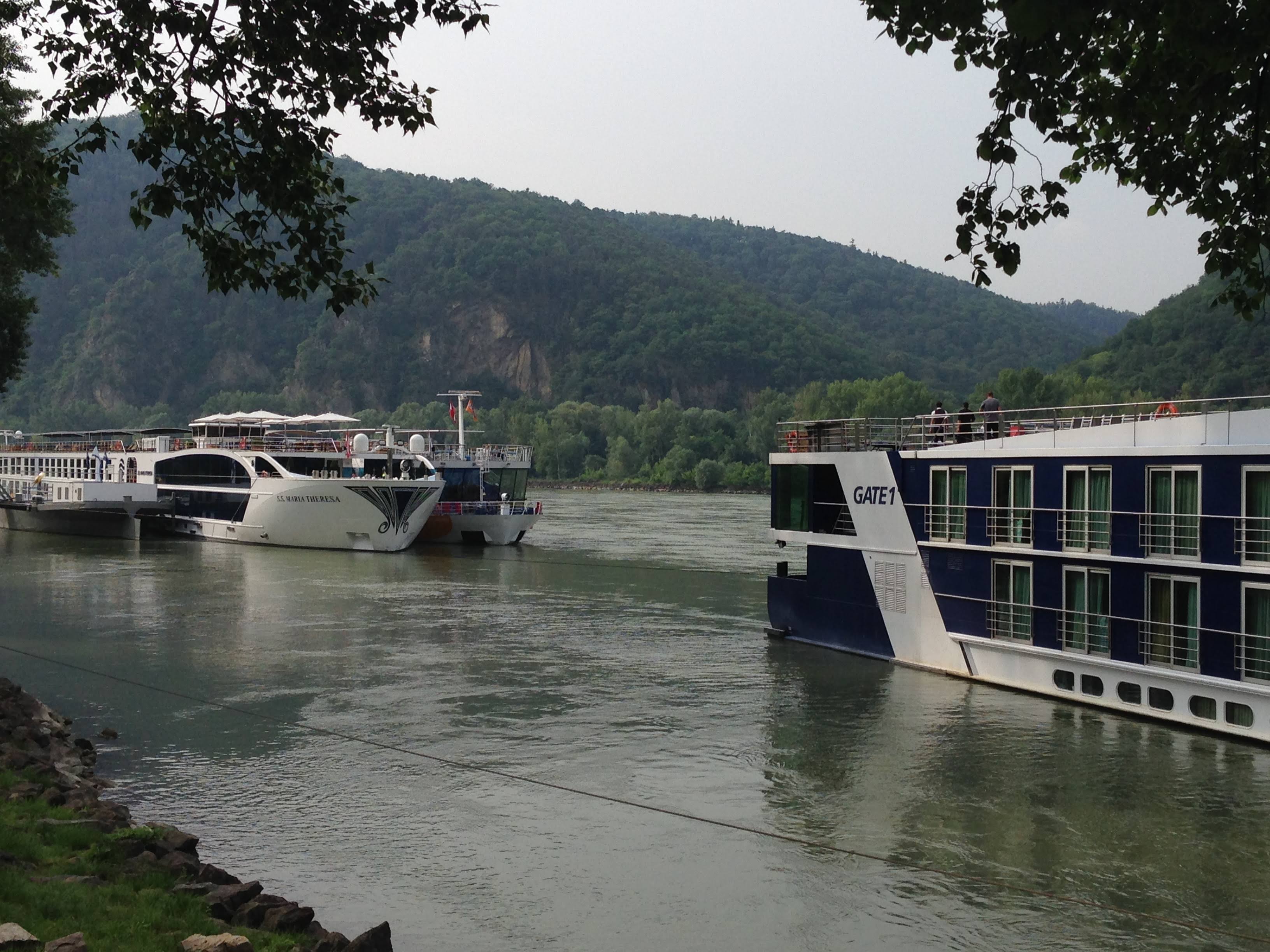
With the ongoing Hollywood writers' strike, things are a little slow for me right now. Not Covid slow, but certainly there is much less going on than there should be in Vancouver's booming TV & film industry. I've written tons (too many?) posts about river cruising, and I mention Gate 1 often, as they are one of our preferred operators.  But I have not done a detailed piece on our end-to-end experience, so I thought I'd waste some time doing it.

Introduction

"I've never heard of Gate 1" is a common statement I hear (read) on the FB group I belong to. That's because they don't do any traditional marketing, and essentially rely on word-of-mouth and 3rd party marketing sites like Travelzoo.com to promote their offers. I had signed up a while ago, and on their weekly email, sometimes a river cruise deal comes up. In this instance, it was for a last-minute (last-couple-of-months) deal for a 12-night Danube cruise with extensions in Budapest and Prague, in a Cat B (upper deck Panorama room) for $1,899! And this wasn't some heat-of-the-summer or chilly late fall cruise; it was a very desirable late May departure. Even though she had been a travel agent, she hadn't heard of Gate 1, so we did some Googling, and sure enough, they are a worldwide tour company, and while I don't know when they started doing river cruises, they certainly were not new to Europe's waterways. Tip: You can also find great deals from Gate 1 by signing up for their weekly email called "The Deal", as well as checking periodically on their website and clicking on "Specials" to see their last minute deals page.

Pre-cruise experience

When you see a deal on Travelzoo, it likely re-directs you to the vendor's website or lists a promo code that you need to (or your travel agent needs to) quote when booking. So I picked up the phone and got to the Gate 1 agent. After selecting our room on the ship, the conversation went like this:

"That will be $8,398 total."
"Oh, I've got a Travelzoo promo code."
{sound of agent typing in promo code}
"Your new total is $3,798; how would you like to pay?"

Since we were within about two months from departure date, we paid in full at booking. Tip: Note that there was an option to pay via cheque, which would have saved us 5%, but by using my VISA, I get additional insurance coverage, which you don't get unless you pay the entire tour on your premium credit card. Since we used my airline points to buy our tickets, we did not get transfers to and from the airport included, and so the only other communication we received from Gate 1 prior to our embarkation date was the tour package sent via email (on the date of booking) and then another welcome email three days prior with some final details and answers to some FAQs. We didn't receive any backpacks, travel folios or baggage tags.

Budapest pre-cruise extension

As mentioned, since we did not buy air through Gate 1, we had to make our way to the Hilton on our own. We simply grabbed a taxi at the airport, and a half-hour later, we were checking in. Note that the Hilton we stayed at is no longer part of the brand (now a Crowne Plaza), and Gate 1 might still use that hotel, or I have seen that they also use the Corinthia Hotel Budapest; not riverfront like other cruise operators' selected hotels, but still on the edge of Pest's old town. So depending on which hotel you get put up in, you might be in for a 20-minute walk (Crowne Plaza) or 5-minute walk (Corinthia) to the old town area. The Hilton was very comfortable accommodations, and we found the included breakfast to be amazing. The hotel was attached to a popular shopping mall called Westend, which made it convenient to grab a quick bite that afternoon. Tip: If you're coordinating your own pre-cruise extension in Budapest, we recommend booking a hotel on the Pest side; it is where most of the interesting sights, shops and restaurants are. We attended an evening welcome briefing at the hotel, where they served us a drink, outlined the highlights of Budapest, and gave some restaurant suggestions. We were introduced to our other travel companions that would be joining us on the river cruise, and then headed out for dinner on our own.

The next morning, we had an included tour of Budapest, which required a bus to get us around. First stop was Heroes' Square, which is decent jaunt from the old town area. Then we went back via coach over to the Buda side where we visited the attractions on Buda Hill: Fisherman's Bastion, Matthias Church and the Royal Palace. In the afternoon, our local Gate 1 host took us on an included walking tour of the Pest side of town, starting at the Parliament building. We didn't get far before a rainstorm blew in, so we ditched the rest of our tour. We still got soaked walking back to the hotel however, which leads me to another tip: bring a packable rain jacket or compact umbrella on your daily outings, unless you are absolutely sure it isn't going to rain. After drying ourselves out, we grabbed another dinner nearby on our own.

Embarkation day

Our stateroom on the Baroness
Since we were on a pre-cruise extension with Gate 1, all we had to do was set our luggage outside our rooms by a certain hour, then we were free to do some more exploring, until it was time to report to the coach outside our hotel. The brief bus trip deposited us at our ship, the Monarch Baroness; this is one of the ships that Gate 1 leases, and has had a slight update since we were on it. It was certainly not a new ship, but was comfortable and tastefully appointed. Unlike our recent Emerald trip where the room was very sleek and bright, the Baroness staterooms were more of a traditional decor (sorry about the dark photo; should have waited until we were not next to another ship). A quick Google search will bring up other current Gate 1 ships' interiors, and they all seem to have the same style of decor... not overstated, but also not "Euro" design. I think ours was 165 sq. ft., which is typical for a French balcony room, except Viking’s at only 135 sq. ft. As indicated in my description of a typical river cruise day, you don't spend a ton of time in your room, but the fresh air and light ingress is nice vs. the "swan view" rooms in the bottom of the ship. 
Monarch Baroness bathroom 
Bathroom was small of course, and many other operators' ships will have the slightly triangular shower (I guess technically a pentagon) that we had; functional, but not as large as the ones on our Emerald or Vantage cruises. Note: the Vantage River Voyager we've been on is now being leased by Gate 1 and sails under the name Monarch Queen. There is also one ship that was purpose-built for Gate 1 - the Monarch Empress; these both have large(r) bathrooms, and my tip would be to try and get on one of those ships if it is possible for your itinerary and schedule. 
We were in a cabin second from the back before the gym (which almost no one used). I don't recall any noise from the engines at night, but our room's door did rattle when at sail; we fixed that ourselves by stuffing a face cloth in the jamb at night. We didn't have a choice for category of room, but as with most river cruise ships, the standard panorama "balcony" rooms on the middle and upper deck are the same; a tip to save money would be to purchase Cat D staterooms, as they are typically only $400 more than the bottom level. However, I noticed recently that the handful of Cat D rooms sell out quickly. After the obligatory welcome cocktail reception, the Cruise Director introduced the crew, then went through the basics of river cruising that we've become familiar with, and then we joined our new friends for dinner downstairs.

Meals and dining

Monarch Baroness dining room
The format for the restaurant on our Gate 1 was the same as all the rest of the river cruise experiences we've had. If you got up really early, you could grab a continental breakfast in the lounge; I used to run there in the am for a banana and coffee to kick start the morning. There was a buffet breakfast each morning in the dining room with a number of options, as well as the made-to-order egg and omelette station. I like to nab a muffin or put a slice of cheese and ham into a bun for a mid-morning snack. At lunch, there was again a buffet, and if I recall correctly, a pasta station; beer and wine was an extra cost at this meal. Unlike other cruises we've been on, there was no afternoon snack or high tea service in the lounge mid-afternoon, and only some cookies at the self-serve coffee and tea station. Seating was ad hoc, and there were a number of seating combinations, with mostly tables of 4 or 6 chairs per table. The dress code for Gate 1 is casual, but I like to wear smart casual attire for dinner; some took the casual attire note a little too far, unfortunately. We had "tank top guy" that eventually was requested to up his game, as he stopped showing up in the restaurant wearing it. I've posted my thoughts and tips on packing for European trip here. Dinner was 4 courses each night (with three choices for the main), except on the Captain's farewell dinner night, featuring 5 courses. 

4 of 5 courses for Captain's dinner
In general, food quality was great with beautiful presentation, and over-the-top service; we find that we dine better on river cruise ships than we would choose to eat if on our own. I don't recall ever seeing the bottom of my wine glass, and believe you me, I tried! I did find the soups to be a little lacking in substance... sometimes just a light broth or in the case of the Captain's dinner, a "porcini mushroom cappuccino". What we did like however, is that they served a local recipe as one of the options each night (and sometimes at lunch); e.g. goulash in Budapest, Wiener Schnitzel in Vienna, etc. Don't leave the dining room with an empty glass; the servers will be only too happy to send you on your way with your wine glass full!

Tours and excursions

Ships moor close to old town areas
Since we were on the upper Danube, most of the daily excursions were simply a walking tour that embarked right on the edge of the river as you stepped off the boat. However, when a coach was required, Gate 1 had a first-come, first-to-depart procedure. Once the first bus had enough passengers, off it went, and you didn't have to wait for the folks who had to run back to their room for their Quietvox device, or the slowpokes who felt "the bus will wait for us". This did break down on the return trips however, as folks had left their extra stuff on the bus, so we had to wait for these passengers to return prior to leaving. There might have been a slow walkers group, but we never saw them. The local guides were fine; as I have mentioned before, they are going to be the same guides that the Viking and other cruise ships use. Having to make sure that you had some local coins for a tip at the end of each walking tour was a minor inconvenience, but something you needed to be prepared for. 

Rest stop Austrian vista
We only opted for one optional tour, which was the day-trip to Salzburg; at $100 each and almost 3 hours coach-ride each way, it was a substantial commitment. But the alternative was to spend the day in Linz, and we felt that we'd have a better time in Salzburg instead. The bus stopped at a beautiful rest stop (think Bavarian restaurant perched on the edge of an Austrian lake surrounded by mountains), breaking up the long drive. We felt that the included lunch at the Abbey took too long, detracting from time we could have spent doing more exploring. And as much as I love schnitzel, I had eaten it twice in the last two days, and would have preferred another option.  

Leaving Passau for Regensburg
The only other tour that required a lengthy coach was the Regensburg trip. We were docked in Passau (I think water level was low, otherwise we'd have docked in Regensburg itself), and did a morning walking tour there, and then you had the option to go via coach to Regensburg for the afternoon. After a long day on the bus the day before, we debated not going, but we're glad we did, as Regensburg was one of the highlights of the many cities that we visited. We only sailed during the day once, when we went through the beautiful Wachau Valley. This would be the equivalent to the section of the Middle Rhine, but without all the castles. It was the same day that we visited the postcard-cute town of Durnstein and then Melk Abbey, so it was a nice change versus the big city of Vienna and our following day trip to Salzburg. The one option that we didn't get that is usually featured on other operators, is the Cesky Krumlov excursion, which is supposed to be amazing.

Onboard entertainment

Loot won during evening games
Since this was our third river cruise, we had set our expectations low for evening activities onboard. Unlike other operators who hire a snoozy piano player, or some local folk music band, the Entertainment Coordinator on our cruise was very flamboyant and entertaining all to himself! We would look forward to topping up our wine glasses after dinner and heading to the lounge for an hour and a half of fun games and laughter. This might also have something to do with the average age of the cruisers on our Gate 1 trip; we were still the youngest on board, but would estimate the average age to be in the mid-60s, versus others like Uniworld and Vantage where the average was mid-70s or higher. Similar to those two cruises as well, the guests were mostly American, with a small smattering of Canadians and others; not surprising, given that Gate 1 is a US company.

Disembarkation and Prague post-cruise extension

Powder Tower and Municipal Hall
After disembarkation in Passau, we had a 3-hour coach trip to Prague (with rest stop too), but since it was too early to check in, we were given a brief orientation walk near the Powder Tower and Municipal Hall. Then once we got into our rooms, we freshened up, and we gathered again for the bus tour of Prague. We asked why we were jamming this all into one tiring day, when we had two other full days there; perhaps they've changed this for subsequent travellers? We were essentially on our own for the remaining two days, but we had no trouble filling them with things to do.

The hotel selected for us was the Art Deco Imperial Hotel, which was walking distance to pretty much all the sights in Prague; it was a great hotel, and we would recommend it if you are travelling there on your own. The included breakfast buffet was excellent, and their croissants were amazing! Anyhow, my next tip is to use the Rick Steves Audio Europe App to take a free walking tour of the old town area. You'll hear him tell you things that you didn't get on the Gate 1 tour, and you can pause the tour anytime if you feel like a cold drink or see a shop you'd like to investigate. 

Additional fee items & non-inclusions

As indicated earlier, we didn't get free beer and wine with lunch, which wasn't too much of a concern for me, and she doesn't drink alcohol. Update: apparently they are now serving beer and wine with lunch. I can't remember what the à la carte drinks cost, but I believe they were in line with other river cruises we've been on. Wine selection was fine for my palate, but wine snobs might be disappointed in the selection on board; I don't recall an option for premium wines. Tip: I like to try local beers, and would stop at the local supermarket on the way back to the ship to grab a few (at a fraction of the price onboard) when in each new country. 

Getting to/from the airport is easy
Gate 1 only includes transfers if you buy your airfare through them; this is common among the other operators except a few (like Emerald) who provide free transfers regardless. However, as we usually like to show up a day or two early to help shake the trans-Atlantic jet lag, the free transfer on arrival is not applicable anyways. This is an important tip: getting in a day or two earlier not only helps you acclimatise, but if there are any unforeseen delays, you still have a good chance of catching your ship at embarkation. Similarly, since you probably want to maximise your European vacation, you'd need to find your own way to the airport after your own post-cruise extension, as an included transfer on the end won't have any value either. Another tip: Gate 1's extensions were included for us, but normally if you are looking at optional pre- or post-cruise extensions, they will be far more expensive with the operator than what you could do on your own.

No free water bottles
You won't be getting any free Gate 1 branded items like backpacks, travel wallets, baggage tags or reusable water bottles; however there will be ample bottled water provided daily in your room. The main thing that you need to be concerned with is tipping, which is outlined in your welcome package email. You will likely need some euros/local currency on your trip, but not a lot, since almost all your dining takes place on board; most stores will take credit cards too. Tip: I find that I can get the best exchange for euros at my home bank, and can even barter a little with the teller, versus the foreign exchange at the airport on arrival. If you're going to use an ATM in Europe, make sure you use one attached to a local bank or clearly branded as one, and not some dodgy one in a pub; always let your home bank perform the currency conversion too.

You'll need to make some minor purchases so that you will have coins available for the onshore local guides as well as public toilets. Bathroom tip: WC facilities will be free at sites like museums and major chain hotels; take off your Gate 1 lanyard, and walk into the lobby like you own the place, and head towards the restaurant or bar to find the bathrooms.
For the onboard tipping, we had a strange requirement that the Cruise Director be paid in cash, while the rest of the crew and the Entertainment Coordinator could be added to our final bill; I learned later that this was because the CD was a contractor. This was a minor inconvenience, and they gave us enough notice for us to stop at a bank machine prior to disembarkation day.

One omission on Gate 1 was the lack of bicycles for guest use. However, we found on this Danube itinerary, that there wasn't an opportunity to use them, as our days were filled with activities without needing to do further touring via bicycle. However, for those that are going on say, a Tulips n' Windmills cruise, you'd probably find an afternoon or two where you could have taken advantage of them. We certainly could have used some for Budapest, but we weren't on the boat at that time yet.

Conclusion

As mentioned in other posts, I'm cheap I like to save money, and so Gate 1's tag line of "see more of the world for less" resonates with me. And I might have given you the impression from the previous section that Gate 1 is a no-frills brand, but they're not. You get 95% of the experience that you'd get on say, Viking, for almost half the cost. Sure, apples-to-apples comparisons are hard to do, as most of the time Viking is giving you free or reduced airfare, but if you know what you're doing, you can come up with a reasonable comparison. And as I wrote about before, the friends we met on this cruise that went on a subsequent Viking one, indicated that they preferred Gate 1, and won't sail with Viking again. Based on our four river cruises (Uniworld, Vantage, Gate 1 and Emerald), Gate 1 comes out on top by a small margin. These river cruises aren't light years apart; but depending on what you want to get out of your trip, you might have a different viewpoint. i.e. We are relatively easy-going, and can roll with the punches, so-to-speak. We like the river cruise experience because we unpack once, and get to see a variety of new European places and countries with relative ease; it's a small, boutique hotel and restaurant that floats down the river with you. But if you are the type that is looking for a "cruise experience" foremost, and "where you visit" is a secondary consideration, then you might feel a little underwhelmed by Gate 1; I'd probably suggest Scenic or Tauck in that case.

Tuesday, April 18, 2023

The travel blazer

Travel and Leisure

Recently, we went shopping on a dreary, rainy April Sunday. A rare outing for the two of us, as we are not really shoppers, per se. Well, that's not really true, as I am a shopper, but I normally just choose to do it from the comfort of my leather armchair. Most of the time, I'll just scroll through the listings on FB Marketplace until something catches my eye. But this time, we went to the Metropolis to check out some footwear for her; shoe shopping is the one thing that I don't think can be done well online. Anyhow, while she was off perusing on her own, I came across a blazer that I thought could be a great fit for European travel.

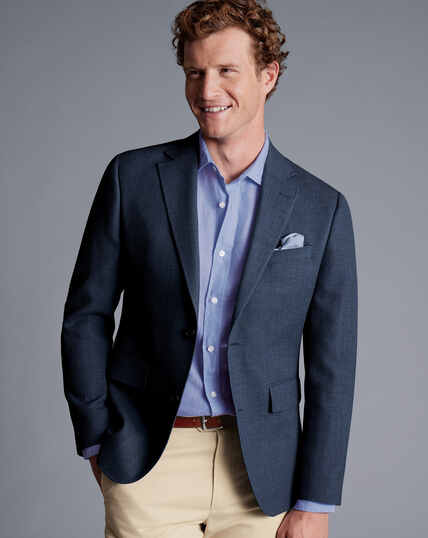
Eddie Bauer Voyager II Travel Blazer
So you might be reading this, and are thinking, why a blazer at all? Well, as is often advocated by others online, it's best to try and blend in a bit when you're in Europe, as it makes you stick out less as a potential target for thieves and pickpockets. And in general, you want to match with your surroundings; you're not going to wear a tuxedo to a restaurant, so why would you wear just a t-shirt either? Sure, things have changed over the years, and Europe isn't the formal attire place that it used to be. You'll read things that say, "men never wear shorts", but in the heat of the summer, I've seen (i.e. heard the foreign accent of) many European men who were wearing fashionable shorts. Runners (referred to as trainers over there) used to be frowned upon. Well, if you haven't noticed, the fashion trend of bright white tennis shoes has been around for quite some time now. But back to the question at hand - why bring a blazer? It's because there is probably no single piece of men's wardrobe more versatile than a plain blue/navy blazer. 

Ok, so to be honest, I have (at last count) five navy or blue blazers. But in my defence, I've acquired three or four of them in my quest for the perfect travel blazer, but even though they weren't the ones, I decided to keep them for work as an Extra. A good blazer can be used to dress up a pair of jeans or chinos and t-shirt. You can also make a half-decent dressy look when paired with an Oxford shirt and maybe even a tie. Make it a little more casual by leaving your shirt untucked. With room for a sweater underneath, it can double as outerwear.
In the right material, it might even ward off a sprinkle; flip up the collar to keep the cool evening breeze off your neck. Maybe even worn on the plane if it gets a little too chilly. Some fashion pages will even have them paired with nice shorts... I'm not sure about one however. But with the push these days for one-bag travel, the navy blazer might be the one jacket to to rule them all. Worn on while travelling, it might even help you get into those elusive business class seats up front. 

I saw this look in Italy first!
Sure, there will be occasions where bringing a blazer as the only jacket is not the right call. For example, on our last trip, we went to Croatia and Eastern Europe, where it was going to be relatively warm, and we had a more relaxed itinerary. Some days, we would be out hiking around the lakes and waterfalls, and others we'd be out all day exploring a new town. Fine dining was not really on the agenda, so I took a more outdoor-style jacket with a tuck-away hood and a more casual look. Or the times when we went to Europe in the shoulder seasons (April/early May and late Oct./Nov.), when more than one jacket was required; e.g. a real raincoat as well as a mid-layer one. But with a sweater, or even a quilted vest, you can extend the season of the blazer if necessary. Bridging the winter season, I'd probably have to bring two "jackets" as well as mid-layers, but might still be able to get by with carry on by wearing the heaviest layers while travelling. 

But what makes a great travel blazer, versus just a regular blazer? Well, the key in my opinion is versatility. Ideally, it would be slightly unstructured; that's what allows it to be used in both casual and slightly more formal settings. With a little less padding in the shoulders and without the stiffness created by the canvas basting, you can adapt the blazer to a wider variety of options. Too little structure and fabric choices like nylon make the garment into really just a nice looking piece of outerwear, which cuts down on its utility. Like the discontinued Victorinox one pictured right, which reviewers say is too flimsy to hold its shape and not enough like a true blazer. You see the amazing pictures online, and you want to love it, but the reality is that it won't look like that in person. The also discontinued Lululemon New Venture blazer has the right material to be a good candidate; except for a strange front pocket design and snaps instead of buttons, it could have been a possible alternative. 

While it's nice to have a full lining normally in a blazer, having less material makes it more lightweight and easier to pack (if required). Not patterned ideally, but maybe a bit of texture to the weave so as to not look too formal; navy blue is a little more versatile than black, in my opinion. I've recently discovered the value of 4-way stretch fabrics, and if you can find a blazer made with this, you'll appreciate the enhanced mobility and comfort. Wrinkle-resistant is an obvious requirement for travelling, and there are blazers now that can be machine-washable, which is a huge bonus. You're not going to go out in the pouring rain in only a blazer, but a water-repellent one would certainly be a nice-to-have.
 
I didn't used to worry about security too much, but for our upcoming trip to Paris, it would be great if it had at least one inside zippered pocket. I started my search originally with the Eddie Bauer travel blazer, of which there have been a few different versions. Like the Victorinox one, it looks great in the photos, but trust me, it doesn't wear like that when trying on in the store; the material is too light and it doesn't "hang" very well; it's as though it is designed for hot, humid destinations. I've probably looked at a dozen different brands, but for one reason or other, they did not fit the bill. Some are better outerwear items than others, and there are many that are beyond my budget range.

Well, as I had mentioned at the start of this post, I found it. The almost perfect travel blazer by Perry Ellis. A lightweight, wool/spandex blend blazer with all of the above; bonus that it was on clearance AND further markdown! It even comes with a little 8" x 11" bag that it folds up into. But what would have made it perfect? The addition of a zip-in placket or bib that would make the blazer more adaptable to blustery or cooler evenings. I also saw a gentleman on our last river cruise whose blazer had a hood that zipped off, where the zipper was hidden when the collar was down, but that's probably too much to ask. But if it does get cool enough where one button isn't enough, I'm hoping that I'll have brought a quilted vest to pair with this blazer.

Tuesday, March 14, 2023

DIY audio walking tours

Travel and Leisure

Ok, so this is how much of a travel geek I am. Let me back up a little bit. My number one travel tip that I give to people who are going or returning to Europe, is to take advantage of the free walking tours with Rick Steves Audio Europe App. If you read the article, you'll understand why this is the way to go to get insight and historical information about the sites and attractions you are visiting. Sure, you could get a local guide, but then you are on a schedule, and who wants that while you're on vacation?

RC Walking Tours recording studio
Self-guided tours require reading
So for our upcoming trip to France, I picked up a couple of his guidebooks. I noticed that he has written self-guided tours for places not covered on his Audio Europe app, but instead you have to read them while you are at those locations. We've actually done this recently for our last European trip; for each new place we went to in Croatia, we looked up free self-guided tours and would cut & paste the text onto our phones. With this info literally in hand, we'd walk around town, and one of us would read it aloud, so we knew what we were looking at. I can barely walk and chew gum at the same time, so reading and walking are definitely out of the question. And while this was better than no context at all, I prefer to have someone telling me the background or history while I walk and explore (not to mention the issue with my far-sighted vision).

This got me to thinking, what if I just dictated what Rick has written and recorded it to a file to play on my iPhone? And that's what I decided to do today... well for one walking tour. It took me a bit to figure out the best way to record and edit the file, but now that I've done one, it is going to make the rest easier. It's still a bit of work, as I'm not a natural orator, and my pronunciation of some of the names and places is definitely a little off. I also found that the best way to play these on an iPhone is to bind and upload the recordings as an M4B file and then load as an audiobook using the Books app. 
That way, when you are using playback, you have access to controls to skip forward or more likely, backwards, by 15 seconds. I used the AudioBookBinder app (Mac), so there are “chapters” that are available via that control, which allows you to jump to a specific spot on the tour, just like the Rick Steves app. Also, using the Books app, it will remember where you are, so that if you decide to take a break for a coffee, or spot a shop that you want to go into, you don't need to fast forward back to pick up your place in the recording again. Where the map in the Rick Steves book has numbered points of interest, I've used the same numbering plan.

It definitely makes things easier and informative when we are touring our destination, and it gives me something to do during our cold, wet winters.


Tuesday, February 14, 2023

Searching for the perfect travel backpack

Travel and Leisure

(Note: this isn't one of those sites where I get paid a commission for items that you click through and purchase; I've included links for your reference only.)

With all of the recent travel chaos and lost luggage stories, many folks are turning to carry on luggage as their next option for overseas travel. As I've written about before, there are numerous choices that will be acceptable for airline overhead bin storage (55 x 40 x 23 cms), but if you're like us, many of the places we will go require traversing many blocks of cobblestone streets, or have numerous stairs or hills that we'd encounter.  So when I started looking for travel backpacks for both of us prior to our 2022 Eastern Europe trip, I did all of the usual Google searches, and came up with far too many options for backpacks. I realised that was due to the fact that everyone has different needs, and you really can't have a one-size fits all travel backpack. Or can you? If you're the kind of person that needs a backpack most of the time, and only a duffel bag occasionally, then you can stop reading now.

Typical use case scenario

A little travel laundry kit
Let's back up to what I think are typical needs, and that will eliminate many outliers in your search. The fact that you're reading this means that you are prepared to pack for only 6 days or so, and do laundry along the way. You've either had trips where you came home with clothes you didn't wear, or saw folks lugging huge cases around the old town area because it was too bumpy to use the wheels. And if you're amongst the majority of folks, you're not planning on going hiking with all of your clothes and gear on your back; you just need a convenient way to get it all from the train station to your hotel or Airbnb. 15 minutes walk? No problem. Anything longer, or if it is pouring rain, you'll catch a taxi or Uber. Once you're at your destination, you've either dropped off your bags, or checked them somewhere, and you're off day-touring with your man bag and her travel purse. If this description sounds like you, here are what I think are the basics for your carry on backpack wish list:

  • Maximum dimensions 55 x 40 x 23 cms (21.5" x 15.5" x 9")
  • Approx. 40 litres volume; 35 litres for her and 45 litres for him
  • Weight of ~1.5 kgs (3.25 lbs.) or less
  • Reasonably comfortable, tuck-away backpack straps and hip belt
  • Single main storage compartment (vs. divided)
  • Slightly structured/padded sides so that the pack retains its shape
  • Ideally, a suitcase-style opening vs. clamshell
  • Simple exterior with a rectangular-ish design
  • Some simple organisation pockets for smaller item storage

What size backpack?

Illustration: Sarah MacReading
Ok, so how much space do you really need? From a practical standpoint, I'd say as much as you can get away with. But while my math on the maximum carry on size should yield 50 litres, you really can't attain that, with the physical constraints of the backpack, and adding things like straps, padding etc. But for most men, your torso is going to be a pretty good fit for a 45 litre backpack, so you might as well take advantage of that. For her, you might have to drop down to a 35 litre bag, not from a weight perspective, but because the bigger backpacks won't fit as well. 80 total litres will be sufficient for the clothing you need for spring through early fall trips; don't forget that you will be wearing your bulky items on the plane.

Why you don't need tons of features

You'll likely have a day bag
Rick Steves talks about bringing just one backpack for travel, but when you see him on his shows, he always has a small backpack on his shoulder, and likely you will too. Whether it's a 15 litre daypack, or a 5 litre crossbody bag, it will hold all of your necessary items that you need easily accessible for the plane, as well as your day touring requirements (I just purchased the Travelon Courier Tour bag pictured here). That's why I'd say that you don't need a ton of organisational capabilities for your primary piece of luggage, as most of the good stuff will be in your day bag. e.g. You don't need a USB charging port, or a water bottle pocket on your carry on backpack; it's going to be in the overhead bin or back at the hotel when you need those things. I actually bought a new, unused eBags Motherlode Jr. bag for her, but after closer inspection, it had too many features that deterred from the basic function of packing clothes. It's a great deal for a smallish 3-4 day bag, or perfect for weekend travel; it sold quickly on FB Marketplace.

I found this NY Times article informative, but didn’t agree with their recommended bag choices. There are tons of bags that fit the size requirements for carry on on Amazon, most are quite inexpensive. But I'd tend to steer clear of the all-in-one types, or ones that tout tons of pockets and features, but cheap out on the backpack straps and hip belt for carrying. You also don't need all sorts of handles on every side; they just get caught on things. Another thing that many of these Amazon bags lack, is any padding or structure to the bag, and so the load tends to sag, even if you've got the compression straps cinched up. Speaking of that, try to avoid compression straps that are on the outside of the main compartment zipper. e.g. I had also purchased an older, used Tatonka Flightcase 1150, but you had to undo/redo the compression straps each time you accessed the main compartment. It was still a very comfortable backpack with sturdy construction; as such, it went quickly on FB Marketplace as well.

Types of opening style

Cotopaxi Allpa 42 clamshell
The other reason I sold the Flightcase, is that it was a clamshell opening; the main compartment had a secondary zipped partition, and a decent amount of the volume was used up by the front compartment that I felt lacked real world usability. Packed to capacity, it would actually be fairly easy to exceed the maximum depth for carry on as well. With bags that have only one large, main compartment with a suitcase-style opening, the space can be filled to the traveller's liking, either using packing cubes or simply folding or rolling your clothes as you best see fit. The new Tatonka Flightcase has solved these concerns, but unfortunately being mostly sold in Europe, there weren't any of these floating around on the used market. Any of the clamshell opening bags require that you have secondary zipped mesh dividers, or else your stuff would spill out when you try to open or close it. As such, highly rated bags like the Cotopaxi Allpa force you to divide your stuff into the two sides of the bag, minimising versatility in my opinion.

Keep it simple

Her RS convertible backpack
It's hard to find a travel backpack these days that doesn't have a dedicated space for a laptop, which I dislike, as I never need to bring one. Yes, I know that when empty, the void literally does not take up space, but there's extra padding there that you don't need. I've only encountered one backpack that does not have a laptop slot, the Rick Steves convertible backpack. Since he designed the bag, it's no surprise that his almost meets all of my criteria for the perfect carry on backpack. I actually found one for free on Facebook, and she used it for our Croatia trip, but found it a little uncomfortable when worn for longer periods. I would have preferred some minimal padding to give the bag some structure, and the shoulder straps/waist belt could be a little more substantial. The price was definitely right, but even at full retail from his site, it's still on my list of decent packs.

Travel backpack unicorn?

The one bag that I found on the web that seemed to meet all of my requirements, was the Tortuga Setout. Again, a very simple design, with all the bells but no whistles; their highly touted, more expensive Outbreaker model has too many organisational features and pockets that you don't need, and it is almost a kilo heavier. With 45 litre and 35 litre models, the Setout would be a perfect his n' hers set. With careful packing, you can easily distribute two travellers' contents across a total of 80 litres. Unfortunately, the Setout was not as popular as their Outbreaker model, and was discontinued in 2021. They have a new model called the Travel Backpack 40L, which looks excellent and is much like the old Setout, but at $349 USD, is very expensive. But if you're scouring FB Marketplace, and a Tortuga Setout comes up, buy it!

Good enough?

Illustration: Sarah MacReading
In the end, I came across a highly-rated backpack on FB Marketplace called the Osprey Porter 46. It ticked off the important boxes on my must-have list, namely single main compartment, bag with structure, and good straps/waist belt. I'd say that the comfort level of this backpack exceeds what we need, as you could probably walk around for hours with this and 8 kgs on your back. However, it is a front-panel loader; I would have preferred a traditional suitcase-style opening, but it has not been problematic. It does have external compression straps, but the design of the compression system gives the bag structure and can really bring down the volume; at 46 litres, this bag is technically a little larger than carry on size, but can be cinched down to meet the size requirements. For you true, one-bag travellers, this is it; with a laptop sleeve and organisation slots, it has almost everything you need. She liked mine so much, that we now have two of these!

Other backpacks to watch for

There are two other bags from Osprey to keep on your list to watch for are the Farpoint 40 and Fairview 40 (his n' hers) backpacks. Very similar design to the Porter 46, with very good backpack capabilities and due to their popularity, they often come up for sale on the used market. The other bag from Osprey that I might have bought if it came up for a decent price in FB Marketplace would be the Osprey Transporter Carry-on 44. With a more rectangular profile, it doesn't give up any space that the Porter or Fairview models do with their rounded corners. The one drawback for me is the main compartment is divided into lower 2/3 and upper 1/3 areas, with zippered partitions; I don't think it would be a deal-breaker for me however, if I found a used one at a decent price.

Close, but not close enough

In the end, what I really wanted was a somewhat rectangular bag, with some structure to it, and backpack straps for the odd time we need to carry our stuff to/from the train station. The discontinued Arc'teryx Covert Carry On, beautiful in its simplicity, was almost the perfect bag, but there are too many bad reviews about how uncomfortable the backpack straps are. But as you can see, there are a ton of options out there, and you don't necessarily need to spend $250+ USD for a travel backpack. But if you come up with a list of bags that meet 80% of what you are looking for, then you know what to watch for on the used market. Both our bags worked well for us on our recent trip to Europe, so we don't need to change anything, but it's interesting to see how these bags are evolving; e.g. they seem to be less and less concerned with hiking-like features, and more along what I outlined in my use-case profile.

Monday, February 6, 2023

Using an eSIM for travelling

Travel and Leisure

Everyone carries a smartphone with them on their trips abroad, and they likely have figured out that you probably shouldn't let your phone "roam" onto the foreign carrier network, right? I wrote about this a long time ago, in a previous post about using your smartphone in Europe. Don't need data or calling services while you're on vacation? Then you can stop reading now. I have long advocated that you can likely get by using free Wi-Fi services at the hotel or around town. But for some, the ability to use data and/or make the occasional call makes their travel lives easier, especially when you are doing your own self-guided trip. And yes, there are those US folks who have a $10/day plan through Verizon or whomever, but we're typically going to Europe for 14-21 days, which would add hundreds of dollars to the mobile bill. For you T-Mobile users, you're lucky to have an unlimited free international roaming option.

Well, for those of you with a relatively new smartphone (maybe you upgraded to take advantage of new camera capabilities?), there is a somewhat recent innovation called eSIM that is about to make things easier but at the same time, very complicated for some people. What is an eSIM? I grabbed this right from Wikipedia:

An eSIM (embedded-SIM) is a form of programmable SIM card that is embedded directly into a device. Instead of an integrated circuit located on a removable universal integrated circuit card (UICC), typically made of PVC, an eSIM consists of software installed onto an eUICC chip permanently attached to a device.

Nearest mobile store not so near?
So what does this mean? Well, most of you know what a SIM card is - the Subscriber Identity Module - it's the little chip that you pop in and out of your phone that tells the mobile phone network who and where you are, and how to ring you when someone calls your number. It's how you can go to Europe, buy a local SIM card from say, Orange, and swap it into your unlocked phone, and bingo, you're using a much lower cost way of using your smartphone in Europe. Of course, you had to find a kiosk at the airport, or wander around town to find the local Vodafone, as most good prepaid options need to be sourced in-country. But there was that time when we were in Dubrovnik, and the nearest mobile store was far enough away from where we were staying that it was not worth bothering. To further compound this, there are those folks that want to use their home mobile number while away, not some randomly assigned, in-country one.

But I digress; we'll get back to that issue in a bit. If you have an iPhone XS or newer (and similar era Samsung or Google ones), chances are that it now supports eSIM. Now, instead of seeking out a SIM card at a local provider, you can buy a prepaid eSIM online, and activate it before you even leave home (here's the Airalo instructions for iPhone). At its simplest level, you can now switch from your domestic SIM, and use the services of your eSIM, just as if you had swapped out physical SIMs. I looked up current offers, and Orange has something called a Holiday Zen package, with 8GB of data, unlimited European calls and 200 text messages, all for 20€.

Newer iPhones support SIM & eSIM 
Now here's where things get interesting. Most of the phones that support eSIM also support dual SIM usage; i.e. you can keep your domestic SIM installed, AND use the eSIM simultaneously, switching back and forth as required. Why would you want to do this? I'm going to avoid the whole discussion about having one SIM as your business number and the other as your personal one; that's a domestic use case but here's an Apple support page with more on that. What I'll discuss now is the travel scenario where you would be roaming on your domestic plan in Europe.

Say you need/want data services while you are out and about, so that you can not only take advantage of things like Google, maps, Tripadvisor, etc., but also be able to email or iMessage? Or maybe you need to make a quick call to say, the Airbnb host in Budapest? But sometimes, you need to make or receive a call with someone back home? Well, now you have almost every situation covered with dual SIM capabilities and your newly acquired European eSIM.

By enabling Wi-Fi Calling for your domestic carrier SIM, you will be able to make and receive calls on your domestic number, and even send and receive SMS messages to/from your domestic number over Wi-Fi1. You probably want to make sure you are on decent Wi-Fi for this, but I was surprised to receive a call one evening on our river cruise over the ship's Wi-Fi. Update: some home carriers also allow for you to route calls and SMS messages over your eSIM's data - i.e. calls to your home number will come in as a VoIP call if you have the setting enabled. 
In your phone's settings, you can specify which SIM you want to use data with, which in this situation would be your European eSIM number. Now with the European eSIM you will now have the data services you need when you are day touring to navigate, search for restaurants and shops, and if you bought the right pre-paid plan, make calls. More likely, you could probably get away with a data only European eSIM, and these plans are even cheaper than the above-mentioned Orange example. This works particularly well for travellers from the West coast, as anyone you would typically need to talk to back home, isn't available until after ~4 pm, when you are back on your hotel or Airbnb's Wi-Fi.

Yes, I know this can/will get confusing, so if it's too much for you, just pay your $10 per day, and go on about your way. And BTW, I'm no expert on this; yes, I am/was an electrical engineer, and my major was actually telecommunications. So if you need help, try Google. But for those using iPhones, here's a link about getting an eSIM for travelling. And here's another good page that walks through the exact settings for your smartphone to enable the eSIM.

1 You should always check with your carrier for Wi-Fi calling availability and find out whether additional fees or data usage applies from your data provider. e.g. TELUS and Bell do offer Wi-Fi calling, but not outside of Canada.