Retirement Life
It's funny. You work all those years trying to achieve financial independence so that you can retire, but most people don't have the faintest idea what they will do once they do retire. Given that I had started thinking about it a few years prior to my exit from Company A, I had been doing some reading about how to retire.
You see, I was often the man you would go to in order to solve the problem. The guy to bring to the presentation to make the executive pitch. The presenter that the marketing team wanted to take on the roadshow to talk about the new products. The problem solver that got us out of that issue with the customer, and secured the next purchase order. The leader to bring the team together, even though things were going to hell in a handbasket (what does that even mean?).
So instead of being "the man", I started teaching others to be... well, me. Rather than just give the presentation, I'd say, "I'll give the pitch this time, but I expect you to watch me, and then be able to do the same the next time.". Even if I knew that resolving the current challenge would take less time, I'd push the individual(s) to learn how to work it out, so that the next time, it could be done without me. It's a hard thing to do - we've built our professional careers around self-importance and promotion; indeed, how else would one get ahead, if you're not going to boast about your accomplishments? But as one co-worker once told me, when you're leaving a company, it's not about you anymore.
Did it work? I would say that without a doubt, yes. Sure, there is a transition period where you feel a bit abandoned... from hero to zero, as we used to say. And as much as you'd like to think that you will stay in touch with "the old work gang", it doesn't happen. Sure, you go for a few lunches here and a few beers there, but they don't really want you around anymore - you're the free-wheeling retired guy, and they resent you for it. Similarly, they still have the drudgery of the day-to-day work, and let's face it, you don't want to be dragged down by that anymore. So after a few months, you're on your own... get used to it.
Next: The first phase of retirement


 You guys all know I am a geek at heart - I watched every episode of Star Trek as a kid, and yes, I have a downloaded copy of the entire original 3-year series. It's actually the concept of the Borg that springs to mind here - the "Collective" and the power that they had together, instead of the sum of the individual contributors. I, as an individual, am not what has made Sun successful at TELUS; it's you - all of you, working together as a team that have been the winning combination. Truly, I have you to thank for my success at Sun - and some who are no longer here too. But the point is, that taking out a single Borg has minimal impact, as the combined entity of the Collective is virtually unstoppable. Our results this year proved that when the past leader left, we were still more than capable of winning as a team; my departure will be no different.

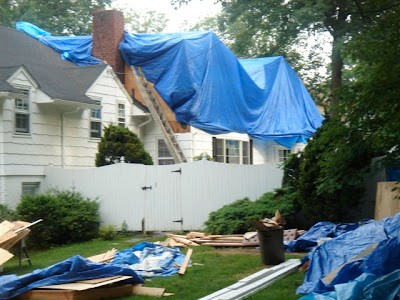 I know, it's not exactly cheap to re-roof - trust me, I've done it. But these are $1.7m+ (update: now closer to $3m) properties, and I find it shocking that folks won't spend the small fraction of their investment on a new roof to protect the integrity of their home. What are they hoping for? That the leak will repair itself? Or that maybe, just maybe, it won't rain this winter? If you end up waiting too long, the water gets in, and it goes everywhere - into the walls, joists, floors etc. Rotting wood compromises the entire structure of the house, and of course, causes mold growth and all sorts of health issues that come along with it. By waiting, these homeowners are simply forced into doing the work when the deluge does inevitably come, and the roofing company is charging a premium for their services.