en·tro·py /ˈɛntrəpi/ [en-truh-pee] n. 1. a measure of randomness. Herein you will find a random collection of musings, ideas, and tips about travel, retirement life, tech stuff, organisation and other seemingly unrelated things on the internet.
I went looking for some details on our French trip, and couldn't find it, so I thought I'd do an abbreviated photo-documentary of our 21-day tour de France. Follow our clockwise route from Paris below; clicking on the images will open a gallery view with higher resolution photos. And there's detail on what it's like travelling in France in this blog post: Things I learned in France.
Our tour began by immediately heading to Reims on the TGV upon arrival at CDG. Pronounced “rance”, Reims is located in the heart of the Champagne region. Many tourists do Reims as a day-trip from Paris, and that is certainly doable, but we were heading east, so it made sense to stay here, and we also tried to use it as a decompression stop from our trans-Atlantic flight.
Rather than TGV it right to the Alsace region, it looked like Nancy was worth a look, so we booked a night there. With a metropolitan population of a little over twice that of Reims, Nancy felt bigger, and for those looking to visit, it merits a stay here.
We moved on to our new Airbnb base in Alsace for 5 nights, the incredibly cute town of Colmar. We'd been here briefly back in 2009 on our first river cruise, so we knew that it was worth coming back to explore in more depth.
Some that visit this region prefer to stay in Strasbourg (below), but Colmar is actually closer to most of the sights and attractions that we wanted to visit, and has a similar (but much smaller) feel than Strasbourg.
With only four full days in Colmar, day trips in the region included Château du Haut-Kœnigsbourg (below), the Alsace wine route, and going back to Strasbourg. The Château fell into ruins, but after German Emperor Wilhelm II took ownership, he had architect Bobo Ebhardt painstakingly reconstruct it in the early 1900s.
We did all this using the efficient train system, except for the wine route, where the Kut'zig hop on hop off shuttle was a bit of a failure (detailed in the post earlier). The postcard-cute towns of the Alsace are worthy of a day's touring, that's for sure. We’d been to Riquewhir on our river cruise, but Kaysersberg, and Eguisheim are the other ones that stand out.
Our next Airbnb for the next 5 days was in Dijon, in the Burgundy region. Again, with train travel bookending our stay, we only had 4 full days in the region. It’s a big city, but it has a charming old town centre and amazing architecture.
Day trips included Beaune, Besançon, and Lyon. Surprisingly, Beaune (below) was a bit of a disappointment for us; it had been over-hyped in everything we read, and just didn’t seem to have the charm that we’d come to expect from the Alsace towns.
The citadel at Besançon was huge (couldn't really capture a photo of it), and is the highlight there, but there was a lot to see along the main drag that winds through town. Roman-era structures and gates still loom over roadways.
Lyon was better than I had been expecting, especially the Roman ruins at Lugdunum and the museum there, along with the Vieux Lyon area.
After our time in the Burgundy region, it was time to head back to Paris for the last leg of our trip. We chose a VRBO in the heart of the city, just west of the Pompidou Centre. We had originally booked a hotel for the trip we had planned in 2020, but Covid forced us to cancel. For the dates we wanted to rebook in 2023, it ended up that the Rugby World Cup was taking place during the same time and hotels were charging outrageous prices. It ended up being great, as the neighbourhood was very central (i.e. walking distance) to many sights, shops and restaurants.
There's so much to see in Paris, so we used a combination of Rick Steves walking tours on his Audio Europe app, and ones that I recorded from his book. It made wandering around Paris a little more structured, and added great colour-commentary to the sights in the city. The first Sunday of each month is free museum day, but rather that join the mobs of people at the Louvre and Orsay, we chose the smaller ones to visit instead.
We ventured into the Montmartre district (the one area that we really needed to use the Metro for), and unfortunately it was also the one day that it rained on us, but only for the morning. We wandered down to the Place de la Concorde, then walked up Les Champs Élysées to the Arc de Triomphe.
We bought the Paris Museum pass for 48 hours, and started it at the end of the day above, to go up to the Arc for views of Paris, and then blitzed the rest of the major museums and included attractions the next day. Again, using Rick’s audio tours, we got the highlights of the Louvre, L’Orangerie, Orsay and a couple of other sites included in the PMP.
Last day-trip for our Tour de France was Versailles (also included in the PMP, and since we were still within the 48 hour period, we were able to use that to get in). It is a sprawling, amazing complex, which was a perfect ending to our vacation.
I had previously written about our two most recent river cruises (upper Danube with Gate 1 and lower Danube with Emerald), but someone posted a request for this itinerary on the Facebook group the other day, so I thought I'd jot down some thoughts and notes regarding our experience. Since we travelled with Vantage, which is now bankrupt, this post will be more about the stops and places visited rather than a review of Vantage, for obvious reasons.
The route for this region will vary by river cruise operator, so this is something that you should make sure you understand before booking. We chose this itinerary (and Vantage) on a whim, as we came across a ludicrous deal on Travelzoo that we couldn't refuse (well under $200 per night in a French balcony room). Of course, the timing for this cruise is springtime, so you typically only have a month's worth of sailings for a given operator to choose from; mid-April to the end of the month seems to be the sweet spot for the best chance of catching the tulips in full bloom.
Pre-cruise extension in Brussels
We never fly in and head directly to the ship; getting over the trans-Atlantic flight and ensuring that any travel delays don't affect our cruise are important factors for us. Since we were embarking in Antwerp, we booked two nights in Brussels. There are folks that will say that Brussels isn't worth visiting, but we'd disagree, and the old town area and the Grand Place are certainly worthy of a visit.
We stayed at the Ibis/Novotel Brussels off Grand Place, which as it sounds, is right off the Grand Place, and only a short few minutes walk from the Brussel-Centraal station. If you haven't stayed at an Ibis or Novotel chain, they are modest, but clean and comfortable hotels that you can find all over Europe. We had our eye on a cute B&B on the other side of the old town area, but they were only available for one night, so settled with the Ibis. We didn't opt for their breakfast package (15€ per person), but we found a little café in the beautiful Galeries Royales across the street.
For only 7€ each, we got this massive amount of carbs to start our day. We actually ate only the croissants, juice and coffee, and took the baguette and cheese along for our mid-morning snack. It's not something I/we normally do, but neither is a 5-km walk before lunchtime. So a tip for you first-time European travellers, is to stock up a bit more on your food intake for breakfast or bring a snack, as you might need a little more energy than you are used to.
Embarkation and Day 1 in Antwerp
Since we did our own pre-cruise extension, even if the cruise operator had included transfers for us, they wouldn’t have been applicable. It was a short and easy train ride from Brussels to Antwerp, then a brief taxi trip to the port where our ship was waiting. Interestingly, since the port there is tidal, when we arrived, we couldn’t even see the ship, and the only thing visible at the dock was a banner for the cruise line. We walked down a ramp onto the top deck and then down the stairs to the front desk for an efficient check-in.
After unpacking, we walked back into the Antwerp old town area for a little exploring on our own. Since we knew from our itinerary that we were going to get a walking tour the next day, we didn’t do a big, extensive walk, and headed back to the ship for a cold beverage on the top deck. That evening, we had the on board welcome reception and briefing. Our first full day of the itinerary started with a guided walking tour of Antwerp, with the rest of the day to explore on our own. After paying 7€ the previous afternoon for a beer on board, I picked up some local Belgian beer at the corner store before returning to the ship.
Stateroom / ship (now the Gate 1 Monarch Queen)
Despite the fact that Vantage is out of business, it is worth mentioning the stateroom we had, as the Vantage ship lease has been picked up by Gate 1, under the new name “Monarch Queen”. At the time, we had only cruised with Uniworld up to this point, in a room with only a window, not floor-to-ceiling glass doors, and a small bathroom with a tiny triangular shower area. Uniworld still has rooms like this, on some of their "Regal" series of ships; something to be aware of if you need a little more room when bathing.
By comparison, this room was palatial, with a bathroom large enough for the two of us to stand side-by-side in front of the sink! It had a much larger, square shaped shower enclosure, with ample room to move around, vs. the cramped Uniworld one. We found out later that the ship was new, and so everything looked perfect, with no visible signs of wear and tear. The ship has an American “Golden Age of Jazz” music theme, and the suites are named for famous jazz greats. You'll find vintage photographs, jazz-themed artwork, quotations, and biographies to read. All of this jazz memorabilia blends with the casually elegant art-deco-inspired earth-tone decor. For anyone looking to book a Gate 1 river cruise, the Monarch Queen is the ship to look for.
Day 2 - trip to Bruges
After our first full day of our itinerary exploring in Antwerp, our ship sailed overnight to Ghent. I don’t recall if anyone stayed in Ghent (which apparently is worth visiting), as everyone seemed to go on the excursion to picturesque Bruges, one of Europe’s best-preserved medieval cities and a UNESCO World Site. Luckily, Vantage got us off the boat quickly in the morning, so we were able to do the guided walking tour of town before the masses arrived.
We finished our tour with a brief canal boat ride through this beautiful little area. For a fun, pre-cruise activity, watch the movie “In Bruges” with Brendan Gleason and Colin Farrell; you’ll recognise the areas where key scenes were shot. On our cruise, we were given an ample allowance for lunch on our own, and so after the tour, we headed off to get a bite and continued exploring. After, we found an incredible beer store called 2be, which had a staggering selection and variety! As I always suggest to others, I picked up some tasty Belgian beers to enjoy back on the ship (at a fraction of the price charged at the bar in the lounge).
Day 3 - Middelburg, The Netherlands
Waking up in The Netherlands, we embarked on our morning walking tour of Middelburg, a city and municipality in the south-western Netherlands serving as the capital of the province of Zeeland. The old historic part of town is quaint, and has an interesting Town Hall. Without the guided walking tour however, it would not have
seemed very interesting, as you’d walk down the narrow lanes and along the canals with no context to what you are seeing, or the history that is embedded within. That said, Middelburg was probably the least favourite of our stops on this cruise itinerary. Back on the ship for late afternoon cruising - we needed to get through some locks, so not very interesting sailing, and certainly too cold to be up on the top deck. Note to self: in the land of windmills, it can get very windy.
Day 4 - Rotterdam and Keukenhof Gardens
After breakfast, we had our own free time in Rotterdam to explore in the morning. Since it was heavily damaged by bombing during WWII, Rotterdam has been mostly rebuilt with modern architectural styles, and it was worth a walk to see some of the unique buildings and structures there. We found a free, self-guided architecture walking tour for our smartphones and spent a little over an hour wandering around the area, which was very close to where we were docked.
Back to the ship to catch a 60-minute bus ride to the tulip gardens; again, we got there before the dozens and dozens of other coaches packed full of tourists arrived. We had an escorted tour of the gardens, where we were informed of the late spring they were having, and that normally the tulips would have bloomed already (we visited on May 3rd). It was quite a sight to see, that many tulips, but after a couple of hours, I was tulipped out. Vantage gave us a generous meal allowance, and the lunch options at the massive food court were fantastic.
I know they were trying to get us to Keukenhof early to avoid the crowds, but I think I would have preferred a guided tour or longer in Rotterdam, and then less time or a later visit to the gardens.
Day 5 - Kinderdijk and afternoon cruising to Arnhem
Waking up next to the UNESCO World Heritage Site, we chose to take the bikes out for a short ride into town along the river for an hour or so. Returning the bikes to the ship, we walked with our tour guides into the canal area to see the nineteen original 18th-century windmills, and went inside one of them. These windmills controlled the canal flood gates, versus the ones that most people think of that mill flour. They were very interesting to see up close, but don’t get too close to the sails! They look graceful from a distance, but those vanes come whizzing by fast; now they have ropes up to prevent inattentive tourists from getting killed, but I’m sure someone got taken out by one at some point.
Back on the ship for lunch and afternoon cruising to Arnhem; unfortunately, as you can imagine, the landscape on this itinerary is quite flat, traversing a number of locks, so there’s not a lot of interesting viewing while you are at sail. We docked in Arnhem under “A Bridge Too Far”; while technically not the same bridge as the one from the famous WWII movie, the John Frost Bridge was rebuilt in 1948 in the same style as the original one.
Day 6 - WWII history or Kroeller-Müller museum visit
We had coincidentally arrived on May 5th, which is Dutch Liberation Day. Canadians played a pivotal role in the liberation of Holland from the Nazis, and to this day, the Dutch still greet Canadians with open arms as a result. As such, we chose to go on the bus tour that went to the Groesbeek interactive Liberation Museum with WWII displays and exhibits. It wasn’t her favourite, but I found it fascinating to visit. Those who went on this tour also stopped at the Canadian War Cemetery, where over 1,000 Canadian soldiers are buried. It would have been fun to stop in Nijmegen to celebrate with the Dutch, but that wasn’t in the cards, and we were carted back to the ship for lunch.
I didn’t ask anyone who went on the other tour how it went, so can’t comment on that unfortunately. I went for a stroll into the colourful shopping streets of Arnhem that afternoon, wondering what the others heard from the local guide on their walk through town after their museum visit.
Day 7 - Enkhuizen and the Zuiderzeemuseum
We woke again in a new Dutch town, this time it was Enkhuizen. The included tour was something that didn’t really appeal to me/us, so we decided to stay and visit the Zuiderzeemuseum, which showcases the stories of the people living around the Zuiderzee, and brings the past to life. It consists of indoor and outdoor museums, with over 130 authentic houses, shops and workshops.
Actors portraying the working folks of the era showcased the life of the residents back then. We probably spent almost three hours exploring, and we could easily walk to and from the Zuiderzeemuseum from the ship. It was a great option for those that didn’t want to go on the “cultural connection” tour and home-hosted visit that day. In the afternoon, we had time to stroll the old town area of Enkhuizen before cocktail hour back on the ship.
Day 8 - Amsterdam and disembarkation
We were moored very close to Amsterdam Centraal Station, and so it was very easy to get into town to explore. We were given an included canal boat tour, which ended near the Rijksmuseum; they escorted us past the lineup into a few selected halls to view some of the artwork on display. It’s a great museum to see, and is probably better than time spent in the lineup to the Ann Frank House (which is overrated in my opinion). We chose to walk back to the ship, and used the Rick Steves free Audio Europe app to do our own self-guided touring.
He has three walking tours in the canal district, so we did Jordaan and the City Walk; we had saved the Red Light District one for after dinner, but we ran out of juice. Amsterdam is one of our favourite cities, but not unlike other European destinations, is suffering from over-tourism. I had the good fortune of spending a few days in my college mate’s flat in Amsterdam a long time ago, so had a chance to experience it before the mass tourism days started. But if your cruise starts or ends here, it’s still worth spending at least a couple of days here on your own, even if you get a day or tour included with your itinerary. We had one last night on the ship before disembarking on the following morning; since we had been to Amsterdam before on our Rhine river cruise, we opted not to have a post-cruise extension here. We didn't do our air with Vantage, so we simply took the train from Amsterdam Centraal back to Schiphol for our flight home.
Summary
At the time we took this cruise, we knew nothing about this itinerary. It definitely has unique cities and stops along the way, somewhat different to the Rhine and upper Danube routes, and as indicated, each operator does slightly different variations. Obviously, being a Tulips n' Windmills trip, you have to stop at Kinderdijk and go to the Keukenhof Gardens. We probably could have done without Middelburg, but maybe it's too much cruising or too many locks to get from Ghent to Rotterdam overnight. I thought we had time to visit Nijmegen as part of the WWII history swing from Arnhem, but perhaps that also wasn't feasible.
In any case, we felt that this itinerary had a wide variety of places to see and visit, from the big city of Amsterdam down to small, historical Bruges. As with other itineraries in Europe, part of the value of river cruising, is that you will stop at places and see things that you would likely not have visited if you were touring on your own. I'd rank this itinerary/area third, behind top rated Rhine and upper Danube routes, but not a distant third, mind you. It's also well situated for good pre- and post-cruise excursions, so that is also something to keep in mind as you look at planning your next European river cruise.
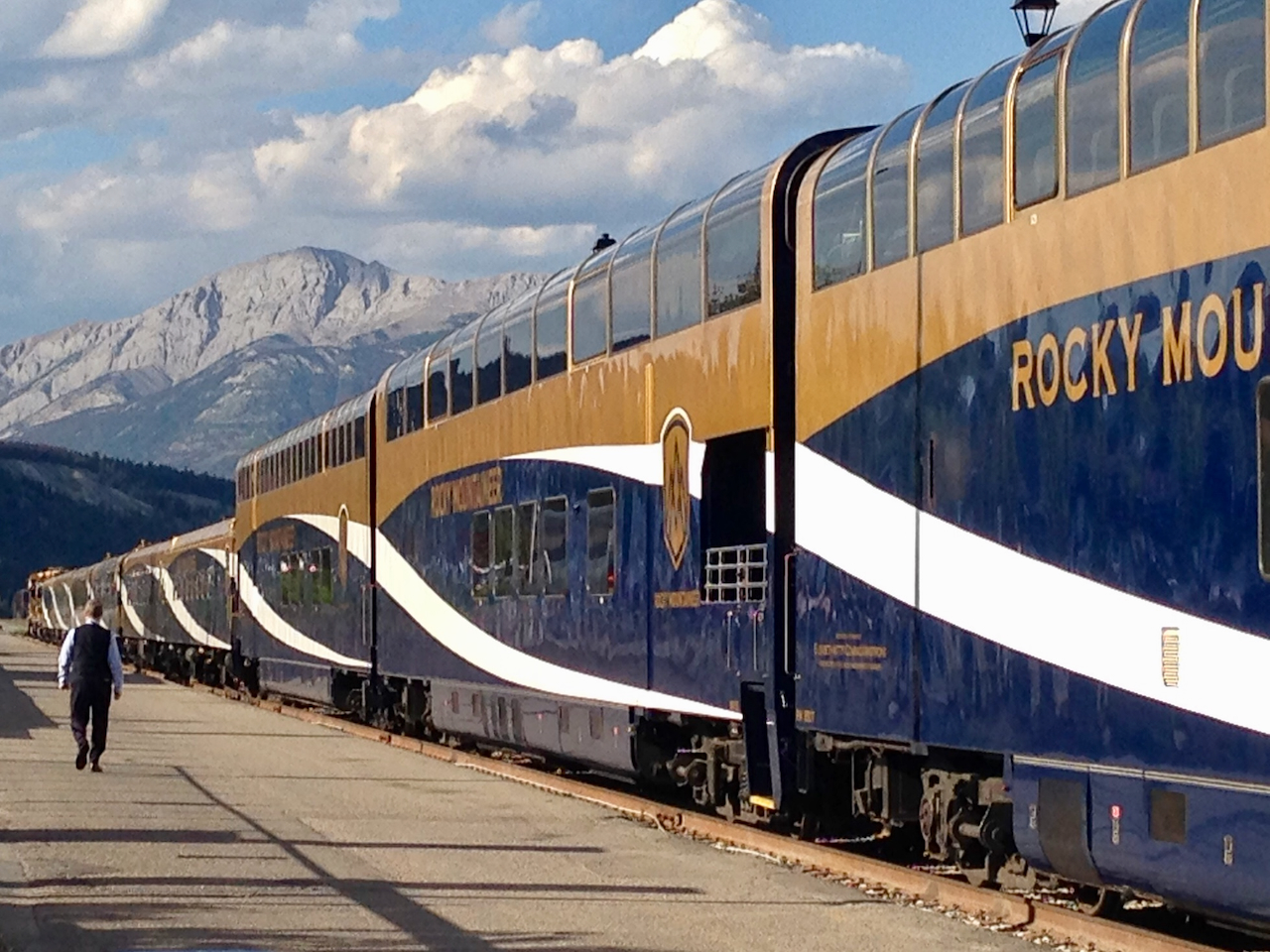
Back in 2018, I was lucky enough to book a gig on Canada's Rocky Mountaineer train. That's right - I got paid to go on the two-day rail trip from Vancouver to Jasper! It was recently rated by Travel & Leisure Readers as the #1 rail journey! With things so slow in TV and film, especially now that the SAG-AFTRA union is also on strike, I thought I'd waste more time this morning describing this wonderful experience.
The "talent" in a domed Gold Leaf car
Ok, so let me start off by saying that my experience wasn't exactly the same as a paying guest, as we were working during the trip, but I was able to experience what it was like in both classes of service, Silver and Gold Leaf. Click on any picture to see the photos in gallery view.
Pre- and Post-rail extensions
Fairmont Banff Springs
Just like a European river cruise, Rocky Mountaineer offers their guests options for staying in the cities at the start and end of the rail trip, at of course, exorbitant rates. Even their transfers are ridiculously priced, but when you see the overall cost of these trips, I guess they are in line with the relative wealth of their travellers. In Vancouver, options are great, and for folks who can afford it, staying at the luxurious Fairmont hotel chain is excellent - there are three properties to choose from here. There are also Fairmonts in both Jasper and Banff, so you have that option with either of the Canadian Rockies destinations. You're not going to arrive in either place and then head home, so you might as well have a luxury experience while you're there. We've not stayed at the Fairmont Jasper Park Lodge, but she had a business trip once that took us to the Fairmont Banff Springs, pictured here.
Embarkation day
But for us lowly "talent" (I have always hated when the crew use that term), since we were all Vancouver-based, we simply showed up at the Rocky Mountaineer rail terminal for a 5:30 am call time! This was because the wardrobe team would not be travelling with us, and so we had to show and get approval for two days' worth of outfits before shooting started. I can't remember when paying guests started checking in, but it was probably around 7:00 am.
It can be a long walk from the terminal
Note: you do/should not eat breakfast at your hotel - I will describe more later. Just grab a cup of coffee and muffin to hold you over until breakfast service starts. Check-in for guests is a very simple affair; there isn't much to do other than wander up to a kiosk and wait for boarding to begin. But here's a strange thing: you do not have access to your luggage during the time you are on the train! You can bring a day bag, but the rest of your luggage gets put on a shuttle that drives to your destination. Since the Rocky Mountaineer only travels during the daylight hours, you do not sleep on the train, and really should not need anything from you suitcase.
Silver or Gold Leaf service?
Shooting in a Silver Leaf coach
There are two types of cars and service levels on the Rocky Mountaineer. Silver Leaf carriages are single-level, with ample 2-2 seating, and panorama windows. All seats face forward, and are very large and comfortable; spacing is like what the old business class seats used to be like on airplanes, but more supple and... cushy. Meals are served to you in your seats, so there is no interruption of your viewing experience.
Crew at the bar area on the upper deck
The Gold Leaf carriages are bi-level, and glass domed; upper level is 2-2 seating and below is set up as restaurant seating. For breakfast and lunch, guests go downstairs in two shifts (more on that later), where dining is set up in 4-person booths. Your field of vision is slightly obscured in the dining area, as the bulkhead for the washroom and a private table setup limits field of vision, as well as the lack of curved windows, due to the seating level above. We experienced both coaches, and in my opinion, the Silver Leaf is almost as good as the Gold Leaf; the panorama windows aren't as expansive as the Gold Leaf domed ones, but you still get pretty good views.
Dining on board
Crew breakfast was still amazing
While we were too busy to have the same meals as the paying guests, we were able to see the amazing dishes that the executive chefs were preparing. They still served us amazing food, but in a buffet style, vs. the served breakfast and lunches for actual travellers. As discussed, Silver Leaf folks will be served their menu selections at their seats (sample menus are on the website), but Gold Leaf passengers dine in two shifts, as there isn't enough table space for everyone to seat at once.
Dining table in Gold Leaf
But in the morning, if you are not in the first breakfast seating, they come by upstairs with coffee/tea and a light snack to make sure you don't starve while you wait your turn. On the next day, guests in Gold Leaf swap shifts, so everyone experiences both breakfast seating scenarios. We ate all our meals in the dining area, and it was not uncomfortable eating while facing backwards. I can't remember what time alcohol service (included) started, but there is a welcome aboard "Cheers" greeting, with orange juice - mimosa optional.
Some of the meal options
As working talent, we were not allowed to drink alcohol; they actually did have the talent drink on the previous year's shoot, and ended up having an incident. But as I understand it, paying guests get unlimited alcoholic beverage service. While we did not sample the food created by the master chefs onboard, they would often bring their prepared dishes to shoot the scenes, and they looked and smelled amazing! Working in TV and film, I've come to appreciate the fantastic food we get served, but even our buffet lunch was over the top! Later that afternoon, they serve a snack of some sort; we shot a scene where the host serves us warmed scones, which we actually go to eat! There is no dinner onboard, as you will have arrived at your hotel by then; dinner at your stop or final destination is not included in your fare.
Onboard experience day 1
Crossing the Fraser leaving Vancouver
Leaving Vancouver itself is not too exciting, as the train leaves a somewhat industrial-looking railyard, and then passes through some uninspiring neighbourhoods. Make sure you do your Vancouver sightseeing before, as you don't see much of "Vancouver" from the train. But since you're having breakfast as you leave, you're going to be excited and hungry, so you'll likely not be disappointed for the first couple of hours.
Curving our way up the canyon
Then you start winding up the a narrow canyon, carved by the mighty Fraser River, leading you into the semi-arid area of British Columbia. Most Americans are surprised to hear that we have a desert-like region of our province where summertime temperatures regularly reach 40º C, with a record set only two years ago in Lytton at 49.6º C! I remember stepping out onto the viewing platform to shoot a sequence as we were curving through the Fraser Canyon, and it was like a blast furnace!
Hell's Gate
At points where the train passes by something significant, the train slows down and your host or hostess will describe what you are looking at, like Hell's Gate. There's not a lot of wildlife that you might see in this area; perhaps some bighorn sheep scaling the rocky terrain. Any sightings are called out by staff or guests, and the train hosts will try to alert the guests in the following cars of any photo opportunities. Leaving the Fraser Canyon, and the Coast Mountains, the terrain smooths out somewhat, as you enter Kamloops for the evening.
Overnight stop in Kamloops
Crossing the Thompson River
Late on your first afternoon, travellers to both Banff and Jasper will overnight in my hometown of Kamloops (although there is a Whistler to Jasper option). It's not a terribly picturesque city, but is set at the junction of the North and South Thompson Rivers. We all disembarked and were transferred to the nearby Sandman Signature Hotel by coach (we could have walked); I think all guests stay here regardless of whether they are Silver or Gold Leaf service.
Locals relax in the nearby park
Unfortunately, Kamloops doesn't have a 5-star hotel like the Fairmont, but it's a nice hotel, somewhat akin or slightly better than say, a Hilton Garden Inn, or Courtyard by Marriott. There is minimal hotel check-in procedure, as all guests will be handed their room key and their luggage will be waiting in their room. The Sandman is situated in the old Kamloops downtown area; not exactly known as the nicest neighbourhood, but there are some good restaurant options nearby (we like Mittz Kitchen) and you can go for a stroll to the nearby Riverside Park.
Day 2 onboard
Outside on the viewing platform
In the morning, leave your bags outside your room and check out from the hotel (again, don't eat breakfast), then you'll re-board your coach on the Rocky Mountaineer and enjoy your first meal as you leave Kamloops. Within an hour, you'll have left the semi-arid, sparse-vegetation area, and the trees will thicken; this isn't necessarily a good thing, as no one manicures the trees that are close to the rail line. Quite often, the beautiful view you are trying to looking at is filtered by the trees that are whizzing by.
Pyramid Falls
You're entering bear country, but I think the odds of seeing one are extremely slim. But you will get some spectacular scenery, with major landscape elements narrated by your onboard host or hostess. The train is quite slow; this is a shared-rail system with other freight and VIA rail's passenger trains. By comparison, you can drive Vancouver to Kamloops in 3.5 hours, whereas the Rocky Mountaineer takes closer to 10 hours!
We headed North paralleling Highway 5 towards Jasper, which takes in impressive views of Mount Robson. Leaving British Columbia and entering Alberta, the landscape changes to wide, glacier-hewn valleys and sweeping mountain vistas. Of course, along the way, you'll be well fed and drinks will be free flowing, until your arrival in Jasper early evening. Everyone will disembark and be shuttled off to their respective hotels (I think Gold Leaf stays at the Fairmont).
Unfortunately for the twelve of us, the shooting crew and other team members, we didn't get to stay in Jasper. We all hopped on a luxury shuttle bus, and they carted us off to Hinton (a nearby blue collar town), where we overnighted at the Holiday Inn Express, before heading to Edmonton to fly home.
Conclusion
While we didn't get the true Rocky Mountaineer experience, I can safely say that we experienced 90% of it, really only missing out on the gourmet à la carte dining experience. Is it worth the extremely high cost? Hard for me to justify, but if you're the kind of folks that regularly fly in business class, then the ~$1,000 per day pricetag may not be an issue. It does take a lot of time, but that's the idea, right? Why fly there in 2 hours, when you can take a leisurely two days getting there instead? Some make it the trip-of-a-lifetime, by flying to Calgary, doing a pre-train extension in Banff, doing the Banff-Kamloops-Vancouver route; spend a few days here with perhaps a visit to Victoria, then take an Alaskan cruise (Update: we did this cruise - read about it here). For me of course, the experience was fantastic, not to mention getting paid to do what others have to pay thousands for. To this day, it remains one of my most memorable travel experiences, even if it was in my own backyard.
I'll leave you with a little tidbit of the content we created over those two days.
Originally started as an internal blog site at my former employer, here you will find miscellaneous ramblings from an ex-electrical engineer, retired from a 30-year sales and marketing career in the tech sector.
Now spending my time travelling and working on other hobbies such as woodworking, photography and being an extra in the TV and film industry here in Vancouver.
I am not a travel agent, but often post travel deals (mostly river cruises) that I come across on my FB page; click on the follow button above if you would like updates to that page. You do not need to "friend" me in order to send me FB messages either.