Wednesday, June 22, 2022

Factors to consider when choosing a river cruise

Travel and Leisure

This question comes up regularly in the Facebook group I belong to, "We're new to river cruising... which is the best company to go with?" This question to me is like, "I've never driven a car, but I was wondering if someone could recommend one for me." Everyone will have different needs and wants, so it seems a little odd that one would ask complete strangers for advice for their next European vacation. There are so many variables that go into choosing your European vacation provider, so I thought I'd jot down some thoughts for your consideration.

Budget

This is likely the number one factor for most of you reading this; in fact, the rest of your consideration factors essentially need to be balanced out against the different financial options. I'll explain more on that below, but if budget is not a concern, you can probably stop reading this blog post, and go with Tauck. I mean, if you have a Bentley sitting in the garage, there probably wasn't even a consideration of who to sail Europe's waterways with. Have I been on Tauck? No, but I don't need own a Bentley to know that you're going to have an exceptional drive. But for the rest of us who drive Fords and Hyundais, who find that a Tauck cruise at $850-1,000/night1 can't be justified, what are the next best options? I've done a price comparison before, and the other two Deluxe operators' (Uniworld and Scenic) list prices come in at around $800/night. You should be able to find decent sale prices for those two (edit: Scenic has been offering 2-for-1 deals through Travelzoo promos), but if you move downmarket into the First Class category, you'll find prices on Ama, Avalon, Emerald and Viking in the $550-750/night range, but usually good promos can bring those down to $300-450/night. Signing up for discount emails from the various operators and marketing sites can bring things down to a very palatable $200-250/night. Be on the lookout for 2-for-1 sales and promotions; of course, someone always says, "you get what you pay for", but in our experience, you get the same cruise that others are getting, just for much less money.

Quantity vs. Quality

When people ask the question on the group, "who's your favourite river cruise operator?", the highest number of results will come back with Viking. Why Viking? It's because they have the most ships and have the largest marketing budget. If say, 70 out of 100 cruisers have sailed with Viking, when you ask the question, you're probably going to get 70% saying that Viking was their choice. It's like saying, who knows who McDonalds is? Everyone does, of course, but do they make the best hamburgers, or is that the restaurant for you? That's subjective, but most would say that their product is very predictable and consistent. I'd argue that Viking is the same; while there are some that complain about their pre-payment policy, they can't have the most ships without delivering a decent quality service, over and over again. Many folks have commented however, that Viking does put the most guests per ship, compared to other brands. Less well-known names with a fraction of the number of ships seem to spend less on marketing and may offer a better experience, with fewer travellers packed onto your ship. Edit: With the recent Rhine water level issues, it is worth noting that Viking having so many ships can be beneficial when the water is too low or too high; they are able to offer "ship swap" modifications to the itinerary, whereas other operators may skip ports, or cancel cruises entirely.

Balancing your travel priorities

So what may be right for the majority of river cruisers, may not be right for you. Unfortunately, that's where the difficulty comes in for most newbies to this unique form of European travel; they don't know what river cruising is like, and therefore don't know how to differentiate the multitude of offers. But what are your priorities with respect to travel? Duration? Time of year? Flexibility? Exclusivity? Inclusions? Activities? Are you more interested in the "itinerary" and are just using the cruise as a floating mini-hotel with boutique restaurant, or is the cruise experience why you are going, and don't really care where you are? I guess my suggestion in this area, is that unless you have buckets of cash, trade-offs can and need to be made in order to satisfy the higher priority factors. e.g. If budget is more important than say, time of year, you are probably going to have to sacrifice something, and sail in the heat of the summer, when Europe is at its busiest, and river cruising prices are the lowest. Or maybe you just can't possibly think of travelling without a butler, so you're going to be limited to sailing with Scenic, or Uniworld (in a suite). And sure we'd like to have bicycles available for use, but is not having them worth passing up a $200/night sale on Gate 1 who doesn't offer them? I can't tell you what your priorities are, but as you peruse the different options available, make note of what your most important factors are, and be prepared to sacrifice the ones lower down your list.

Which operator?

Since I'm writing this primarily for river cruising newbies, who may never have set foot in Europe, this is an important factor that relates to the first one, budget. I wrote an entire post on this, but since you've never done a river cruise, virtually any First Class operator and route will delight you. It's like a high-definition TV; if you've never watched a movie on a 4k screen, you don't know what you're missing with your normal 1080p one. Sure, there are regional differences to each route, but the overall experience is pretty much the same. Yes, the Deluxe operators will have some perks and offerings that you can't/won't get on a 1st Class cruise, but you won't be regretting not having these, since you don't have any frame of reference. And I've stood on shore, waiting for our walking tour to depart, watching the tour guides who have just finished with one group, take off their Viking lanyards and QuietVox headsets, exchanging them for the Gate 1 versions; i.e. the walking tour you get with one operator is the same as the other operators' guests will experience. My message to the newbies here, is don't get caught up in the marketing fluff; you're going to have a great time regardless, so pick the one that best suits your budget and matches with your priorities.

When to go

This is probably going to come as a surprise, but peak season(s) for river cruising are late spring/early summer and late summer. Prices start to increase as the temperatures warm up in spring, but ease up in the heat of the summer, and climb back up later into September. I believe this also coincides with the demographics of the average river cruiser; early 60s to late 70s retirees with no kids to worry about. If you match that description, you're probably also going to want to avoid the heat and crowds in Europe in the summer. Therefore, some of the best sale prices you'll find will be in mid-August, but do you really want to brave the heat and battle with all of the tourists then? Of course there are other cruises where you don't have a choice of timing - e.g. Tulips and Windmills and Christmas Markets. But for most of the rest, you might want to sacrifice some budget to go at a more suitable time of year. There is also the issue of water levels in the river being too high in the spring, or too low in the late summer, but you can't really plan around that. This is especially true this summer; read more on water levels in this post.

Room choice

This is a topic that gets a lot of excited debate in the FB group. Some will swear that you absolutely need to be in a Viking Veranda Suite to enjoy your trip. Others will prefer to save money and opt for the small rooms at the bottom of the ship, with only small, water-level windows to peer out of (I don't recommend these rooms). This is where your priorities come in, and should influence your choice of provider and room. Christmas market cruising? You probably don't want to shell out big bucks for a dedicated outdoor space in the wintertime. Bed absolutely has to face the windows? Avalon. I wrote a more extensive piece on the different types of "balconies" available, but what I want to bring up is the delta in price to move up from the base package. On a 7-night cruise for example, to upgrade from the cheapest room on Viking to a tiny French balcony room will add another $500-600 per person. A larger Veranda room will add $1,000-1,200. On Gate 1's flagship, the Monarch Empress, moving up to a French balcony room for 7-nights varies between $200-400, and an Emerald upgrade to a 180 sq. ft. Panorama stateroom will only set you back $360 per person. 

Ship decor

I wasn't going to write about this, but there is one operator that has interior decor that cruisers either love or hate - Uniworld. Where most operators have gone with clean, sleek lines (e.g. Emerald, Scenic) and others have stayed with contemporary looks (Avalon, Tauck), Uniworld's interiors that some consider too gaudy. It wouldn't be a big issue if you were getting a great deal, and you could overlook the opulent style for a week or so, but their rates are among the highest. Some of their rooms on the middle deck also don't have windows that open (their "regal" series of ships), so you'd have to put up with the outlandish decor AND not be able to have any fresh air in your room. Don't believe me? Have a look at this article from Business Insider.

Independent travel vs. fully guided

Lanyard-free exploring
This is the primary difference between a Deluxe, fully all-inclusive river cruise, and the rest of the 1st Class operators. Are you an independent traveller? Or do you prefer to be pampered virtually every moment of your day? If you're looking at river cruises, you are probably somewhere in-between, but my research would indicate that the more independent you are, the less you need to spend on your river cruise. e.g. With a 1st class cruise, once you have finished the free, included walking tour of the old town area, you can just put your tour lanyard in your pocket, and head off on your own. Go back to the ship for a gourmet lunch? Nah, just grab some schnitzel in town, and keep doing your own thing. Meanwhile, the folks that have paid a premium for a deluxe, fully organized trip, will probably be carted back to the ship for lunch, and be taken off to the next scheduled tour, whether they wanted it or not. Not a fan of the symphony? No problem, since you haven't paid for the optional Schönbrunn Palace concert. In our experience, some of the optional tours take too much time away from your own self-guided options, and use up that precious time that you have in port.

Activity level / average age of guests

Not wheelchair-friendly
It may not surprise you that there are not many/no young people who participate on river cruises, probably due to the relatively high cost, and perceptions of what it is like travelling on European waterways. Some operators do offer more active excursions (Avalon, Emerald, Ama) and many have bikes available for self-guided cycling in or between ports. On the flip side, virtually all lines will have a “slow walkers” group for the daily excursions, but sometimes this does not equate to less walking, just a slow(er) pace. I’ve read that Viking has an older demographic that others, and when we sailed on Uniworld and Vantage, we estimated the average age to be late 70s. Boarding the small canal boat in Bruges (pictured) was an extremely difficult task for some members in our group, and pretty much everything moved slower than we would have liked. While you can’t choose who the other guests on your ship will be, it is a factor to consider when selecting your river cruise operator. I have a hypothesis that the more expensive a cruise costs, the older the average age will be. Our upper Danube cruise was with Gate 1, the leader in river cruise price/performance, we were pleasantly surprised that the average age was in the 60s. This made things like going through evening port talks, and loading/unloading coaches go much more smoothly and efficiently. We also noticed a much higher participation in the evening entertainment events; on our other two cruises, the lounge was virtually empty after dinner.

Beverage services

Another common question comes up on the group with respect to alcohol, and what is included vs. the fully all-inclusive operators. I think one important point should be noted, is that unlike an ocean cruise, you don't really spend that much time on the ship. Think of it as a luxury, floating boutique hotel; with all of the daily tours and activities (self-planned or organised by the operator) that you end up doing, we find that we barely have time for one drink before heading to the dining room. Everyone includes beer and wine with lunch and dinner, and you typically only pay for drinks and cocktails in the lounge. There's even a couple of evenings where they offer free cocktails in the lounge (welcome reception and Captain's farewell dinner), and some lines have free bevvies during happy hour. So unless you take your drinking seriously, I'd suggest that the alcohol package (if offered) may not be worth it; you can always buy a drink here or there, à la carte.

Other inclusions / options

The Deluxe operators will sell you on an exclusive, fully all-inclusive river cruise, with nothing left for you to buy, and many will swear by the ability to "leave your wallet at home!" For a first-timer, this has a lot of appeal, especially if they have experience with ocean cruising, where almost everything comes with an additional cost. However, for pretty much all the operators that fall into the 1st Class category, it is what I like to call "almost all-inclusive". Aside from alcohol noted above, there are very few extra things that you might have to pay for over and above the initial package price. Usually, there will be optional tours (over and above the included daily excursion), and these range in price from $60-100 per person. Tips can sometimes be pre-paid, and are ~$20/night pp for onboard staff, and €2 per guide for onshore tours. So for a typical 1st Class, 7-night river cruise, you might end up paying $300 per person for these extras; Tauck, Scenic and Uniworld cruisers will say that they don't have to worry about these, but they are essentially pre-paying for all of these and more. Everyone lists their inclusions on their webpage, and any optional tours that you might find interesting; it's very easy to total up what you might end up paying with a 1st Class cruise and determine if the additional $2,500-3,000 per person is worth going up to a Deluxe operator. 

When to buy?

This is a good question that comes up on the FB group only occasionally, "when are the best deals available?" For most operators, their sailing season starts in early spring, and continues right through to Christmas Markets in December. But that doesn't mean you need to time your search around the approximate departure date of your potential cruise. Operators offer sales all year round, typically coinciding with traditional sale events (e.g. Canada Day, Black Friday, etc.). Sometimes, this means buying (or at least placing your deposit) over a year in advance. Yes, last minute deals do come up, but I'd call them more like "last few months deals", as I've seen deeply discounted fares on unsold rooms from 3 to 6 months out. If you're flexible on route and dates, you will have the best shot at securing a ridiculous deal on a First Class river cruise. And I'm not talking about a $300/night rate on a mid-August sailing; no, you can find great options for May/June and September/early October if you are patient. Update: I have noticed that recently the middle deck, rear staterooms (usually exactly the same as the rest of the French balcony rooms) are selling out quickly - e.g. even a year in advance. So my typical advice of waiting for the best deal to come around may not work if you're really wanting that late-September Rhine cruise.

I'm sure that some of you may have other deciding factors that will play into your next river cruise buying decision, but I hope that these ideas will give you fuel for thought.

Want to read more river cruising posts? Click here.

1 all prices discussed in this post are USD or approximated USD equivalent; all rooms compared are French balcony or equivalent

Friday, May 13, 2022

What is up with Emerald Cruises?

Travel and Leisure

I belong to a Facebook group that is dedicated to river cruising; it's a fun way to learn about this unique way of travel, and share thoughts and experiences. Recently, there's been a few folks who have indicated that their Emerald cruise had been cancelled, with very short notice (often less than three weeks prior to embarkation). Similarly, there have been a few posts about Scenic cancellations, which is the parent company for Emerald.

So what is happening here? Some think that Emerald is simply cancelling and consolidating undersold cruises; if they are really doing this, they are supposed to be letting booked passengers know they've been cancelled 60 days notice prior to departure. There was also a perfect storm brewing earlier this year when Emerald/Scenic was hacked, causing an IT outage that took out their systems right around the time when travellers were getting ready to book post-pandemic trips, and indeed, filling potential empty rooms. But I think that there's a couple of other factors playing here too. My hypothesis is that when the pandemic hit, cruise staff had to go find other jobs; now that cruising has resumed, they all haven't returned to their pre-pandemic roles, and Emerald/Scenic struggled to fill vacant positions. Additionally, while Covid-19 doesn't pose a life-threatening risk for most of us since we are fully vaccinated, there can still be outbreaks that will take crew members out of service for 5 days or more. These factors seem to have been playing out, as I received this response from another group member, who received the following from Scenic w.r.t. their cruise cancellations:

"The whole team are excited to welcome back our river cruising guests in Europe, with over 40 cruises departing across our Scenic Group fleet (including our Scenic Space-Ships and Emerald Cruises Star-Ships), delivering guests a truly unsurpassed cruising experience on the magnificent waterways of Europe. 

Scenic Group, was required to reschedule a small number of our early season river cruises, due to an unexpected and short-term shortage of crew members, which caused a delay in the release of visa applications.

We apologise to our impacted guests, and have worked to seamlessly adjust guest’s arrangements to alternative river cruises as a priority to ensure minimal impact. Our commitment to delivering an enriching luxury river cruising experience for our guests was at the forefront of our decision making, and our crew are an integral part of this.

We continue to closely monitor these global challenges and continue to be focused on what we love to do, bringing the wonder, luxury and joy to our guest’s cruising experience, as they journey with us in Europe."

But with an Emerald cruise booked for this October, I wanted to try and determine if there was a high likelihood that ours could be cancelled as well. Is it 50%? Or something more like 10%? So with selfish intent, I asked the group who had been cancelled by Emerald, and what route and date they were embarking on the ship. Now I know that this is a totally unscientific evaluation; who knows how many guests are on these cruises that are not members of the FB group? And what percentage of the cancelled group members are actually going to go to the group page, see my post, and comment on it? While the methodology is likely flawed, I had committed to providing an update to the FB group, so let's continue.

(Updated) As of May 16, only five (5) travellers have come forward to indicate that their Emerald cruise was cancelled this season; I don't expect any more. I counted the number of cruises for April and May, and it amounted to around 69 sailings. So that's about a 7% cancellation rate - a far cry from my feared 50%. Statistically however, what has happened does not have a bearing on future cruises, as Emerald (and Scenic) may have resolved their staffing issues now. But if we look at which routes cancelled, that may be more valuable. Three were Danube trips; I thought that since the lower portion of the Danube isn't the most popular, that two of these might have been undersold, but one of the cancelled guests indicated that her sailing was nearly full! This leads me to believe that the Danube ships were/are having staffing problems rather than undersold rooms. The other two were Rhine and the 2-week Amsterdam to Budapest sailings, both in April; since no other cancellations were reported in that region after April, perhaps they sorted out the staff challenges sooner? In the end, we will never know what caused these cancellations, and the data cannot be extrapolated to other routes; e.g. despite the fact that no sailings were reported cancelled on the Douro, that doesn't mean it didn't, and can't happen.
Our Emerald Destiny ship is 80% booked for October!

So have I alleviated any concerns about my cruise being cancelled? No. Without any concrete facts and with the limited data gathered, this endeavour was a bit of a bust. However, with the Emerald booking site back up and running, I was able to mock up a booking on our sailing date, and can see that there are only 11 Panorama Balcony Suites (Cat C, B, and A) left to choose from! With a capacity of 60 available, they're at over 80% occupied in the decent rooms, making it unlikely that they'd cancel our sailing due to being undersold. I know that ships often sail with a lot more empty staterooms than this, so I am starting to feel pretty good about our early fall trip, Covid pandemic and water levels notwithstanding.

But in the end, if you want some peace of mind, it still makes sense to plan for the unexpected, and develop a contingency plan that you can "pivot" to, if necessary.

Sunday, May 1, 2022

A new unit of value (for me)

Retirement Life

This one is going to take a bit to explain. There’s a 2002 movie called, “About A Boy” starring Hugh Grant. It’s a cute, feel-good movie about an immature young man named Will (Grant) who learns how to act like a grown-up through his interaction with a little boy. Anyhow, as part of his character development, we learn from Will how he divides his day into blocks of time or “units”, which equal half-hour periods. 

For example, watching a TV show, well that’s one unit. Internet research (flash cut to Will typing into the url field supermodelswithseethroughtops.com): two units. A visit to the local pub: three units. You get the idea. For years, I've been using this in various forms, so I decided to put this concept into play as a way of measuring my purchases through the work I perform.

As you might have gleaned from past posts, I pass some of my spare time by being an Extra in local TV and film production here in Vancouver. We aren’t referred to as Extras really, I think because that implies something trivial, or added as an afterthought, when we really can be integral to the scene, and sometimes play a pivotal role for the actors to put themselves into character. Referred to in the industry as Background (or BG for short), we are placed on set to add realism and a moving environment for the camera. 

Covid-era Background Holding
Most days on set involve a lot of downtime; sitting around in “Background Holding”, where you can read a book, watch some Netflix, chat with friends, or even have a brief nap. Sure, when the Background Wrangler calls you to set, you need to drop everything, and go do your thing, but you’re effectively being paid for doing nothing most of the time. My wife was chatting with our neighbour over the fence one day, and she was telling her how I had been working in Background. She told her, “It’s great for him; he gets fed, meets up with his friends, can read a book, and it fills his day.” Our neighbour exclaimed, “You put him in daycare!” Which is not far from the truth, in reality.

Anyhow, since this retirement hobby isn’t a revenue-generation necessity, I consider the income I receive from Background work as sort of a bonus. And sometimes, it can be substantial; while a minimum day is only $225, a longer day brings in overtime pay, and sometimes double-time, and can total $450 or more! And not long ago on a brief 4-hour shoot, I was “upgraded to actor” (more on that in another post), which tallied up to over $1,100!

But the basic day, after commissions paid to my agent, is about $200, or what I refer to as one “Background Unit”. So for the last few years, when I consider buying something, especially a purchase that might seem extravagant or perhaps a little out of range for my Scottish financial upbringing, it becomes defined by the number of Background Units it would cost. A new pair of Gore-Tex shoes? One Background Unit. Seat selections for our upcoming overseas flights? Two Background Units. New patio dining chairs? Well that was five Background Units. 

Anyhow, I don't think it will be recognised by the IMF, but for the time being, it's my new way of measuring value.

"About a Boy" images courtesy of Universal Pictures.

Saturday, April 30, 2022

Book your rental car early

Travel and Leisure

Here’s a recent lesson that I learned the hard way - book your rental car as far in advance as you are able to. See, almost all rental companies allow you for free cancellation right up to the day of your pickup, so there is no reason not to book when you establish your travel plans.

I didn’t do this. I knew where we were going, had found a reputable and inexpensive rental agency, and even checked their pickup and return locations. And then I got to thinking, “Hey, maybe I should book this with a credit card that doesn’t have foreign transaction fees”. So I signed up for a Home Trust VISA, and after a couple of weeks, it showed up. But as I was reading through the insurance benefits, I realized that it did not include the typical rental car coverage that my other VISA card has. Oh well, I might as well bite the bullet on the increased transaction fees, in return for the rental car insurance. 

Imagine my surprise when only a few weeks later, the cost for the same rental had doubled! Yes, the exact same pickup and drop-off locations, same dates and vehicle selection. But using a car to get around Croatia is still going to be the best way, so I continued with the booking. And guess what? I didn’t even need a credit card to secure the rental! So ultimately, I didn’t need to wait, as I could have used any old credit card when we arrived to pick up the car in Dubrovnik. With the no-risk cancellation policy, it should have been a no-brainer to take care of this a month ago!

Ultimately, it is not a big deal in the overall cost of our upcoming vacation, but it still pains me that we’re paying more than we should have. Oh well, 4 days x $50 = $200, or as I like to equate it to, is one day of working in Background. 

Edit; After doing a little more research online, I managed to find a slightly better deal, saving $100. The new rental agency isn’t charging the drop fee for returning at a separate location, and using a discount code I found on the web, trimmed off another few dollars. Still, it would have been another $100+ cheaper if I had booked a month ago!

Friday, March 25, 2022

Flying business class for less

Travel and Leisure

Note: the method outlined below doesn't work with all airlines - best to call and check first. I've done this recently with Air Canada and Lufthansa.

Welcome to Business Class!
My wife calls me cheap - I prefer the term frugal. But yes, I do like to watch my spending; I blame it on my Scottish side. I once told her that when I was younger, I would never buy fresh-squeezed orange juice, as it was so much more expensive than frozen concentrated OJ. On a trip to the grocery store a number of years ago, I was hesitating as I reached the juice section, and she scorned me with, "we can afford orange juice!"
But that said, I'm not a business class kind-of-guy. I mean, I don't drink champagne regularly, and have not yet acquired a taste for caviar. Yet there are some tangible benefits that accompany flying in the comfy seats, but it usually comes with a prohibitive cost. Sure, when I was working, I managed to benefit from either the accumulation of frequent flyer points to use for upgrades, or sometimes, I'd just get bumped up by the gate agent. But now that I'm retired, getting into business class seems to be more expensive than I remember, and my frugal nature prohibits me from pulling the trigger on a $5,6001 return ticket to Europe. But there is a way to get nearer to the front of the aircraft without breaking the bank; I'll outline how I like to do this by buying the upgrade à la carte, and why it makes sense for us.

For most of us on the West Coast, getting to Europe is a 10+ hour affair, and then depending on the final destination, it might require another inter-country flight after transiting a hub (we try to limit to one stop). What we've found on our previous European trips, is that the eastbound flight over the Atlantic is the toughest one. Leaving at dinner time, we usually struggle to get to sleep after supper, and manage to get only a couple hours of fitful sleep, and end up arriving in less than top shape.
Business Class lie-flat seat
With the advent of lay-flat seats in business class, experienced travellers can actually get in a decent amount of sleep on the trans-Atlantic flight, and land in Europe relatively refreshed. Being in business class for the short, inter-country flight that follows isn't much benefit, as you're not going to go back to sleep for an hour, and you certainly don't benefit from alcohol service at 9 am! Going back home is a little different, as the long haul flight occurs during the waking hours for your timezone-adjusted body, and as such, we don't find the need to sleep on the westbound segment. While I'd still like to fly in the cushy seats going back, it's less of a priority, as we'll be back home in our own bed, re-adjusting to the Pacific timezone. And you don't have the same need to be fresh on arrival like you do when you touch down in Europe in the morning.

Business Class on the eastbound long haul segment

So this is the new way we like to fly to Europe, for the time being. I'll try to upgrade the eastbound, long-haul flight to business class, and don't bother with any changes to the regional hops. For the westbound overseas flight, I will either try to get into Premium Economy, or at least pay for seat selection that gives us more legroom. What I do, is book and pay for a normal set of economy seats, paying attention to the type of aircraft used by the airline on that route. e.g. pick a small regional-style jet, and the business class seats may not be lie-flat. I may even "mock up" a flight on the carrier's website in business class, and make sure there's ample availability by previewing the seat map. Once you've received your confirmation and booking reference code, you can go into the airline's website, and pull up your flight reservation. Somewhere on the page, you'll see options for seat selection and a button for upgrading each flight segment of your itinerary. In my case, the eastbound, long-haul flight could be upgraded to Business Class for $1,080 - which is a relatively good deal. By upgrading à la carte, you are avoiding the full-upgrade cost on all your segments; in this case, business class would have been $4,108 more than economy, or $2,054 each way. I look at it as getting 50% off, with business class travel for 90% of my outbound flight time! I've even done this on a non-stop YVR-ZRH flight (i.e. no regional hop after) and also ended up paying far less than half of the calculated one-way difference. Update: the upgrade may not be available immediately after booking or with certain airlines. On an upcoming Air France flight, I am able to see that plenty of business class seats are available, but an option to book and pay for one does not exist - yet. After calling in, I discovered that the option to purchase is somewhat demand based; i.e. they want to sell the business class package, before offering to others to upgrade. This means I have to keep checking the site to see if seats become available for à la carte purchase. 2nd update: an option to pay for an upgrade on Air France/KLM never came up, even at check-in!

Upgrading to Business Class gives you premium lounge access
Ok, so what's the catch here, you're probably thinking? Well there are a few gotchas, because the airline conditions still exist as originally booked; e.g. the fare privileges of point accumulation, change fees and cancellation policy apply as they were on the economy ticket. You're effectively only getting the "flight experience" upgrade, and nothing else; e.g. there are still extra fees for checked baggage. But you get priority check-in and boarding, which has some intangible benefits. Oh and lounge access, which is also a nice-to-have, especially as a treat on the outbound segment. I've even used it on arrival in Frankfurt, which is great if you want to have a hot shower to wake yourself up after the long trans-Atlantic flight. All of these things add up to the reasons why we think it makes sense to upgrade the eastbound flight to business class.

What about Premium Economy?

While not as deluxe as business class, the premium economy section also has some benefits, like a more spacious and comfortable seat with extended legroom. Take for example, the new Lufthansa 2nd generation premium economy seats shown here (coming soon, I've been told). These look like what business class seats used to be - a wider, more cushy version, with extended pitch. Using the same math, I booked into premium economy for $370 for the westbound long haul segment, versus the difference on that upgrade would have been $1,015 for the full, round-trip booking, so less value, discount percentage-wise. I would probably have been ok back in Coach for the 11-hour overseas flight, but I'm sure I'd have heard, "we can afford orange juice".

Sunday, March 20, 2022

Making the most of your European vacation

Travel and Leisure

When we first started going to Europe, we did virtually no planning at all. We'd have our plane tickets, passports, and hotel rooms booked, but that would be about it. We've gotten lucky for the most part, as we've received good advice from friends, colleagues, and hoteliers. Like the time we were in Rome, and the owner of the B&B gave us advice on where to get tickets for the Forum & Colosseum without having to wait in line for hours. But there were also many frustrations, like trying to navigate our way to our hotel in Toledo, without a map, GPS or internet connectivity to guide us. Of course, if you're going to do a guided tour or maybe a river cruise, you don't have to worry so much about all the little details, but there should still be some pre-trip organisation on your part. So as we start planning again for the return to travel, I thought I'd jot down some of my travel planning methodology and organisation that I was using pre-pandemic for a trip to France (that we ended up cancelling). In our experience, a little bit of preparedness can make the trip that much more fulfilling; it's also kind of fun to help get into the excitement of a new trip.

With the proliferation of social media, Tripadvisor and other travel sites, you can do a ton of research, long before you head across the Atlantic, all from the comfort of your own home. I like to start with my friends who have visited the country or places that are on the itinerary. Best yet, is if you have someone who lives there; the best travel memories I have, were from trips when I was able to experience the places like a local. Usually, the basic information you want to get early on are things like, "How many days would you stay in Paris?" or, "Would you choose Strasbourg or Colmar as your base for three days?". These are the basics that help you plan your days and time at each destination. Of course, everyone has their own ideas on how best to spend their time, but after a while, you'll be able to interpret answers and adjust accordingly.

Google and Google Maps

I know this seems obvious, but you'd be surprised how much information you can find on your own that will help you build your itinerary. For example, we don't like to spend a long time on inter-city travel. So rather than trying to do France in it's entirety, I Googled the TGV rail network and route durations to come up with a rough circular itinerary where each leg was 2.5 hrs or less. With 14 nights available to us and since we were flying in and out of CDG, we chose Paris, Reims, Alsace and Burgundy for general territories. Next, using same Google technique, I zeroed in on which towns and areas to visit and stay in. Then once we had established a basic outline, I started searching for attractions in the nearby area. Would these be accessible by train/transit, or would a car be necessary for getting to Bourges Cathedral? Using Google Maps, it was pretty easy to figure out when it made the most sense to hire a car, vs. taking the TGV. Which brings me to...

Getting Around

Once you arrive, it's nice to have an idea of how you're going to get to your hotel or next destination. Is the Metro/Underground going to get you where you need to go? (Tip: when using the underground in a new place, use Google Street View to have a virtual "look around" ahead of time, so that you can easily get your bearings when you come out of the station entrance). Or are you in a party of 4, where a taxi/Uber is going to be easier and more cost-effective? Bear in mind that using Uber or Lyft will require data services or Wi-Fi for your phone; we have found that most places have some sort of free Wi-Fi from a nearby restaurant or hotel. Something to look into prior to arrival, is a city pass; some large cities offer a combined pass for all-you-can-ride bus service, discounts or admission to major sites/attractions, and sometimes even city-wide Wi-Fi! Usually available in various multi-day options, these can be great, if planned for and used wisely. For example, the Firenzcard (Florence) can be useful if you are staying out of the core, and plan on visiting a lot of museums, as it will pay for itself in entrance fees (and allow you to skip lineups); free transit will just be a bonus. We didn't buy it however, as we stayed right in the town centre, and could walk everywhere.

Obviously, you can hire a car anywhere in Europe, but do you really need one? We avoid it wherever possible, as parking is usually constrained in the heart of the city, and navigating in a foreign country is not always easy. However, there are times when it really is the best way to get around, or perhaps you are in a party of four, and it works better than other transit options. We try to wait until we are well out of the major city centre before picking up our car, or better yet, take the train to our final area before renting. Make sure you either get a European SIM card for your smartphone to assist you with Google Map navigation, or you can use the maps.me app, as I find that it does a better job of route calculation in offline mode.

In the city centres, sometimes the overly touristy "hop-on, hop off" bus can be very convenient. They typically stop at all of the major attractions, and run from morning till night. With a flat fee for the day, this can be a great way to see a lot of the things that are on the periphery, without spending a lot of time walking, or taking individual buses or taxis. While the underground (or "Metro" as it is often called) is typically very efficient, it doesn't help you orient yourself in the bustling city centre, as you can't see major landmarks whizz by. On my first trip to London, we were stymied getting our bearings, as we had spent the first few days using the Tube; had we taken the Big Bus Tour on our first day, it would have really helped us for the rest of our stay.

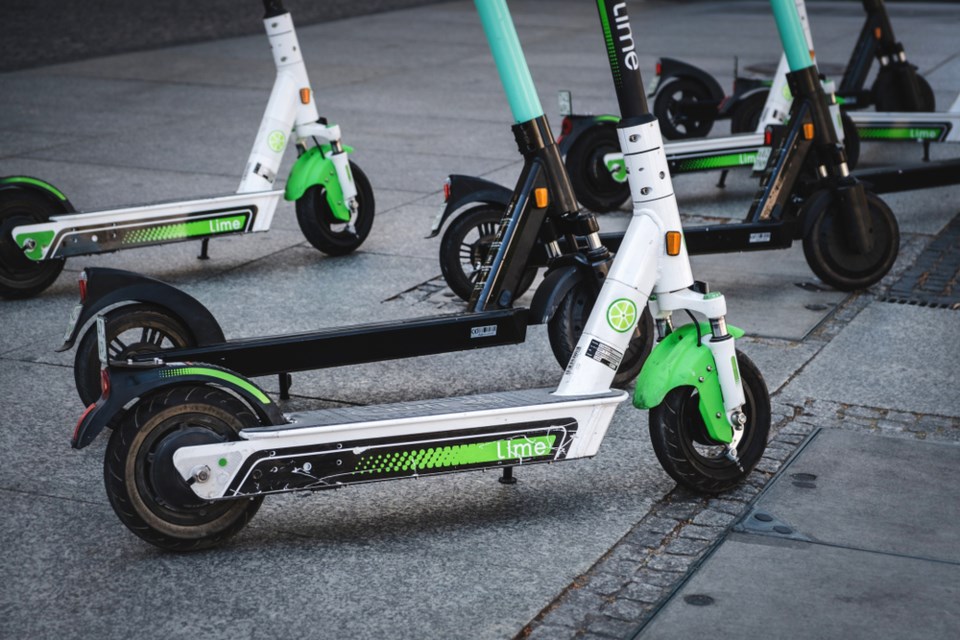
We haven't tried it yet, but can't wait for the day that we get to a city that offers e-scooter sharing systems. Rather than tire yourselves out by walking up and down the hilly neighbourhoods of Lisbon, why not use an e-scooter? Available almost everywhere, e-scooters can be rented for around €10 per hour, and offer a fantastic way to scoot (see what I did there?) around the city. Again, since your smartphone will be required to download the app, find an e-scooter and hire it, you may need a local data plan or WiFi. 

Rick Steves

I didn't used to be a guidebook type-of-guy, until we discovered Rick Steves. We have primarily been using Rick for basic, "how many days do we need in Porto?" kind of research questions, but loved his free Audio Europe walking tours. His content seems to be targeted at budget to mid-range, American travellers, that may or may not have struck out on their own to Europe. A lot can be gained by watching the free, overview programmes on your desired destination (on his website or his YouTube channel), and more off the destination specific page on his site. Do you really need the guidebooks? I would say not, as you can get 75% of what you need from his free stuff, and fill in the rest with Tripadvisor and Yelp (e.g. hotel and restaurant recommendations). I ended up doing an ask on Facebook as to anyone that might have some France books, and got a pocket guide from someone. I picked up the full guides for Paris and France on eBay; while not current issues, most of the info is still pretty solid. Regardless, they make for great reading material to get you excited for your upcoming trip!

Day-by-day planning

This is normally something that we didn't used to do, and we'd make up our day-touring activities on the fly. Until that last day in Rome, where we didn't think to look into the Metro rotating strikes, and couldn't get to Ostia Antica. The things to look out for, are regional bank holidays, Sundays, and attraction closures. You don't want to be planning around being at Versailles on a Monday, or you're going to be extremely disappointed when you arrive. What activities can you group together on a single day? For example, although the Roman Colosseum and Forum ticket is a two-day entry, you can really do both in one day if you plan appropriately. What about those quiet Sundays? Some attractions or historical sites might be open, as well as cathedrals. It's also a good day for outdoor exploration, like a picnic in Florence's Boboli Gardens, or the Szimpla farmer's market in Budapest, which we stumbled upon by pure chance! And don't forget about the weather... what activities can you substitute if sky opens up and your Pitti Palace garden walk is ruined? You don't have to plan your days down to the minute, but by building a rough draft of your days in each city, you can avoid disappointment.

Where to eat?

As one who likes to get a good meal that reflects the local cuisine, I often go onto Tripadvisor or Yelp the night before to at least get an idea of what our food options will be where we will be touring. The usual spots that are in the tourist zones, or right on the pedestrian streets, are typically not very good, as they cater to those who make a last minute choice to sit down for lunch. But if you walk only a few minutes away from the hustle and bustle of the high street, you can find better food, and usually at a lower price. I like to create a trip within Tripadvisor, and then can tag a restaurant (or hotels & attractions) to it. If you input the dates of your trip, you can even put your saved items right into a day on your schedule. Thanks Kimberly for reminding me of this tip.

Using your mobile device

I wrote a more extensive piece on using your phone in Europe, but it's not just a great picture-taking and navigation device. Obviously the aforementioned Google and Tripadvisor are great tools, but it is also nice to have your details handy, without having to carry around printed copies of your plans etc. I started using Tripit back when I was travelling a lot for work, and it allows you to create an itinerary simply by emailing your docs to plans@tripit.com. It works pretty well, and usually can automatically add the details into the app; for other specific info, you can add it in later (e.g. seat assignments, etc.). Other key apps that help organise me include Airbnb, and SeatGuru, but these can be used from a tablet or web browser, and aren't necessarily required to be on my smartphone. Other things that come in handy, are photos of your important ID documents, e.g. driver's licence and passport (and proof of vaccine); we like to leave our passports in the room safe while we are out and about.

Upgrading your travel kit

I also wrote about this recently. Another pre-trip planning thing for me/us, is to take inventory of the things that we will need for our next trip, and maybe make some changes. With a late summer/early fall trip upcoming, I started to think about some things that might be better suited to the weather at that time of the year. One thing that working as an Extra in the TV & Film industry has taught me, is that you can find great deals on used clothing and accessories using Facebook Marketplace. Maybe I need to get better footwear, and perhaps a more versatile jacket? Or since we're probably going to go to Croatia first, the 4-wheel spinners that we normally take for luggage might not be cobblestone-appropriate? Pre-planning ahead gives you plenty of time to keep any eye out for deals on lightly used, pre-owned kit. Or is there some travel essential that you missed last time, that you should really add to this trip? I also wrote about that. With some time to spare before departure, you have a good window of opportunity to get items that you want off eBay and shipped in time. 

It was Louis Pasteur that once said, "Chance favours the prepared mind".

Saturday, March 19, 2022

Comparing balconies on river cruises

Travel and Leisure

Here's a recent topic of discussion on the river cruising FB group that I belong to. "Which stateroom should I pick?", or more accurately, "Who has the best balcony?". And to be clear, I'm not referring to the rooms at the bottom of the ship; I'd not recommend anyone travel down there unless that is all their budget will permit. What I mean by a balcony room, are usually the ones that are on the middle and top level of the ship, that are effectively one notch up from the basement.

Promotional shot courtesy Emerald Waterways
First of all, I just wanted to throw it out there, that most river cruise ships don't have what most would think of for a hotel room balcony; i.e. a separate outdoor space that you can step out onto, and close the glass door behind you. Given the size limitations, river cruise ships can't offer the same type of true balconies that ocean cruisers might be used to, with a landing that sticks out from the side of the ship. There are a few operators that have an outdoor space that some folks would consider to be a balcony (more of a veranda by definition); e.g. Ama (see below), or the Viking Veranda suite. Most operators will try to lure you from the bottom rooms of the ship that only have small portholes or windows (that do not open) with exciting names like "French Balcony Stateroom" or "Panorama Balcony Suite". All of these essentially offer floor-to-ceiling, wall-to-wall scenery viewing and access to fresh air, but there are subtle differences, and indeed varying costs associated with each. What we call these rooms is irrelevant however, as long as you know what you are getting - i.e. you're not walking out onto an outdoor space with anyone's French Balcony.

Rhine photos from the top deck
But before I outline some of the key differences we've seen, I thought it merited a description of what you end up doing in your room, and why that may affect your choice of stateroom. It may not be obvious, but when you are on a river cruise, you don't end up spending that much time in your room during daylight hours. As I documented in my last post, a typical day will have you out-and-about after breakfast, and the only real time you spend in your room is late afternoon, after you've returned from touring, and are freshening up before dinner. On a nice day, you'll more likely to be up on the top deck, enjoying a cocktail, or perhaps up in the front lounge, conversing with newly made friends. Most cruising occurs at night, and pre-conceived visions of lounging in bed watching the scenery go by are rare. And on the day that you do sail the castle-lined Middle Rhine Valley, or picturesque Wachau Valley, you'll want to be up on the top deck, not down in your room.
Ships un-rafting from one another
Another key factor that most newbies don't consider, is where and how river cruise ships dock in port. Ocean cruisers may be used to anchoring well away from the town centre, and so every outside room still has a view or a glimpse of water somehow. Of course, all river cruise rooms are "outside" by design, but often times, your room will literally be within arm's reach of the river wall. If you're on a higher deck you might be staring at folks walking by on the promenade in Budapest, while you are enjoying your morning coffee in your PJs. Other times, you could wake up "rafted" next to another ship, and your expensive balcony now has a splendid view into another traveller's room, or even better, the ship's restaurant.
Rare daytime cruising (window closed)
in the Monarch Queen French balcony
The last point I'll bring up about balconies, relates to the classic promo video of the good-looking, 50-something couple, sharing a warm embrace, while leaning on the railing and taking in the view, with the breeze gently blowing her hair back. Unless you're sailing in the heat of the summer, that scene is mostly fiction; when you are at sail, even on a nice spring or early fall day, the motion-created airflow can make for very chilly conditions. On the rare occasions when we have been in our room while sailing, we've always had to close the sliding glass door to stop the wind from buffeting us. Ok, so let's get to some balconies.

This is the classic "French balcony"; not really a balcony at all, but a sliding glass door that has a railing for both your security and something to lean on. This is one is from a Viking Longship, and what I don't like, is that there is no sitting area for you to enjoy a drink or whatever. At only 135 sq. ft., it's also one of the smallest rooms in this category I've seen. Note how this is two panes of glass, so opening fully only gives you 50% of the available width; when standing at the railing, there will barely be enough room for two people to stand side-by-side.

We like the above type of arrangement as our minimum level stateroom; floor-to-ceiling sliding windows, with a couple of chairs and a cocktail table in-between to rest your iPad, beer or whatever. These rooms typically are more like 170 sq. ft., allowing for the extra room between the bed and the windows. I couldn’t find a good photo of our setup on Gate 1, so I grabbed the photo above of the MS Fortuna, operated by Dutch Barge river cruises.

Here's where things start to get interesting; the above Viking Veranda Stateroom has both an inside sitting area AND and outside veranda. At 205 sq. ft., this is a pretty large room (for river cruising), but bear in mind that you are sacrificing that outside space 100% of the time. i.e. how much time will you really spend out there? Note also that this longship only has one chair inside, but does include a stool, either for a place to rest your drink, or for your partner to sit on (but not both).

Here's another concept, with twin sitting areas, featured above on an Ama river cruise ship. Rather than sacrifice the entire outside space, they've split a small sitting area for both inside and out. Again, you need a decent-sized room to pull this off, and I believe Ama runs about 210 sq. ft. I've never seen one of these in person, but it may appeal to some looking for that outside experience.

This is also a relatively recent innovation, with Emerald's Panorama Suite (and other operators like big sister Scenic); not really a suite, but with their window split horizontally, the top portion slides down into the bottom part to create a railing that runs the full width of the room. You can kind of make out that they've used flooring near the window to create the illusion that you are on an outside deck. It's a really clever design, and you can find more by searching for videos on it. The one drawback that we found with this type of balcony window is that when you are sitting upright in the deck chairs, the railing is right at eye level; I found that I had to slouch down a bit to take in the scenery while seated. Scenic has the same style of window, but they also have a divider/sliding door to your room, so you can create a more outdoor feel, if desired.

My last example is Avalon's Panorama Suite (again, not a real suite), with a 3-panel slider; this gives more space to the outside when fully opened. These are over 200 sq. ft., and with no footage sacrificed to outdoor space, these are some of the largest rooms in this category. Most folks love the orientation of the bed, allowing for guests to lie down while watching the scenery go by, but as I've commented, this likely won't be a common occurrence. I do however, like the love seat and chair conversation area, and that would be where I would spend most of my waking time while in this room. Note that from videos I've seen, it appears that the loveseat faces backwards; e.g. you'll be looking at where you were rather than forward if sitting there.

I think the time of year you will be cruising and what you want to get out of your in-room experience will ultimately sway your preference. e.g. on a Christmas Markets cruise, you'd probably not opt for a larger outside space. Our choices however, have usually been guided by the best price we could find; i.e. when we found a Danube trip on Gate 1 that was offered for a great price, all we cared about was that we did have the floor-to-ceiling sliding glass doors. Sure, we'd love to try Avalon's Panorama Suite, but when we saw a 50% off sale for Emerald, we jumped on that offer!