en·tro·py /ˈɛntrəpi/ [en-truh-pee] n. 1. a measure of randomness. Herein you will find a random collection of musings, ideas, and tips about travel, retirement life, tech stuff, organisation and other seemingly unrelated things on the internet.
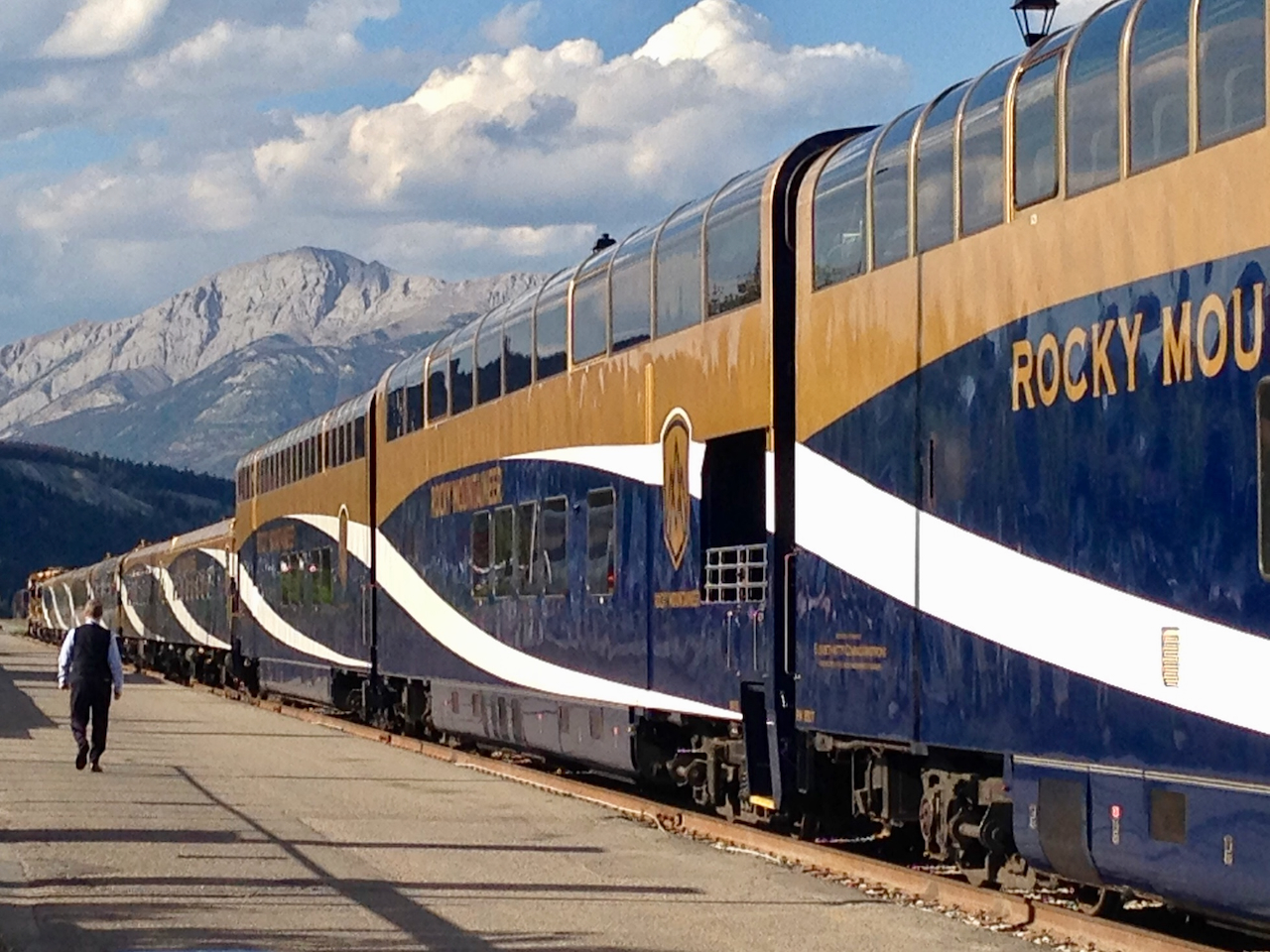
Back in 2018, I was lucky enough to book a gig on Canada's Rocky Mountaineer train. That's right - I got paid to go on the two-day rail trip from Vancouver to Jasper! It was recently rated by Travel & Leisure Readers as the #1 rail journey! With things so slow in TV and film, especially now that the SAG-AFTRA union is also on strike, I thought I'd waste more time this morning describing this wonderful experience.
The "talent" in a domed Gold Leaf car
Ok, so let me start off by saying that my experience wasn't exactly the same as a paying guest, as we were working during the trip, but I was able to experience what it was like in both classes of service, Silver and Gold Leaf. Click on any picture to see the photos in gallery view.
Pre- and Post-rail extensions
Fairmont Banff Springs
Just like a European river cruise, Rocky Mountaineer offers their guests options for staying in the cities at the start and end of the rail trip, at of course, exorbitant rates. Even their transfers are ridiculously priced, but when you see the overall cost of these trips, I guess they are in line with the relative wealth of their travellers. In Vancouver, options are great, and for folks who can afford it, staying at the luxurious Fairmont hotel chain is excellent - there are three properties to choose from here. There are also Fairmonts in both Jasper and Banff, so you have that option with either of the Canadian Rockies destinations. You're not going to arrive in either place and then head home, so you might as well have a luxury experience while you're there. We've not stayed at the Fairmont Jasper Park Lodge, but she had a business trip once that took us to the Fairmont Banff Springs, pictured here.
Embarkation day
But for us lowly "talent" (I have always hated when the crew use that term), since we were all Vancouver-based, we simply showed up at the Rocky Mountaineer rail terminal for a 5:30 am call time! This was because the wardrobe team would not be travelling with us, and so we had to show and get approval for two days' worth of outfits before shooting started. I can't remember when paying guests started checking in, but it was probably around 7:00 am.
It can be a long walk from the terminal
Note: you do/should not eat breakfast at your hotel - I will describe more later. Just grab a cup of coffee and muffin to hold you over until breakfast service starts. Check-in for guests is a very simple affair; there isn't much to do other than wander up to a kiosk and wait for boarding to begin. But here's a strange thing: you do not have access to your luggage during the time you are on the train! You can bring a day bag, but the rest of your luggage gets put on a shuttle that drives to your destination. Since the Rocky Mountaineer only travels during the daylight hours, you do not sleep on the train, and really should not need anything from you suitcase.
Silver or Gold Leaf service?
Shooting in a Silver Leaf coach
There are two types of cars and service levels on the Rocky Mountaineer. Silver Leaf carriages are single-level, with ample 2-2 seating, and panorama windows. All seats face forward, and are very large and comfortable; spacing is like what the old business class seats used to be like on airplanes, but more supple and... cushy. Meals are served to you in your seats, so there is no interruption of your viewing experience.
Crew at the bar area on the upper deck
The Gold Leaf carriages are bi-level, and glass domed; upper level is 2-2 seating and below is set up as restaurant seating. For breakfast and lunch, guests go downstairs in two shifts (more on that later), where dining is set up in 4-person booths. Your field of vision is slightly obscured in the dining area, as the bulkhead for the washroom and a private table setup limits field of vision, as well as the lack of curved windows, due to the seating level above. We experienced both coaches, and in my opinion, the Silver Leaf is almost as good as the Gold Leaf; the panorama windows aren't as expansive as the Gold Leaf domed ones, but you still get pretty good views.
Dining on board
Crew breakfast was still amazing
While we were too busy to have the same meals as the paying guests, we were able to see the amazing dishes that the executive chefs were preparing. They still served us amazing food, but in a buffet style, vs. the served breakfast and lunches for actual travellers. As discussed, Silver Leaf folks will be served their menu selections at their seats (sample menus are on the website), but Gold Leaf passengers dine in two shifts, as there isn't enough table space for everyone to seat at once.
Dining table in Gold Leaf
But in the morning, if you are not in the first breakfast seating, they come by upstairs with coffee/tea and a light snack to make sure you don't starve while you wait your turn. On the next day, guests in Gold Leaf swap shifts, so everyone experiences both breakfast seating scenarios. We ate all our meals in the dining area, and it was not uncomfortable eating while facing backwards. I can't remember what time alcohol service (included) started, but there is a welcome aboard "Cheers" greeting, with orange juice - mimosa optional.
Some of the meal options
As working talent, we were not allowed to drink alcohol; they actually did have the talent drink on the previous year's shoot, and ended up having an incident. But as I understand it, paying guests get unlimited alcoholic beverage service. While we did not sample the food created by the master chefs onboard, they would often bring their prepared dishes to shoot the scenes, and they looked and smelled amazing! Working in TV and film, I've come to appreciate the fantastic food we get served, but even our buffet lunch was over the top! Later that afternoon, they serve a snack of some sort; we shot a scene where the host serves us warmed scones, which we actually go to eat! There is no dinner onboard, as you will have arrived at your hotel by then; dinner at your stop or final destination is not included in your fare.
Onboard experience day 1
Crossing the Fraser leaving Vancouver
Leaving Vancouver itself is not too exciting, as the train leaves a somewhat industrial-looking railyard, and then passes through some uninspiring neighbourhoods. Make sure you do your Vancouver sightseeing before, as you don't see much of "Vancouver" from the train. But since you're having breakfast as you leave, you're going to be excited and hungry, so you'll likely not be disappointed for the first couple of hours.
Curving our way up the canyon
Then you start winding up the a narrow canyon, carved by the mighty Fraser River, leading you into the semi-arid area of British Columbia. Most Americans are surprised to hear that we have a desert-like region of our province where summertime temperatures regularly reach 40º C, with a record set only two years ago in Lytton at 49.6º C! I remember stepping out onto the viewing platform to shoot a sequence as we were curving through the Fraser Canyon, and it was like a blast furnace!
Hell's Gate
At points where the train passes by something significant, the train slows down and your host or hostess will describe what you are looking at, like Hell's Gate. There's not a lot of wildlife that you might see in this area; perhaps some bighorn sheep scaling the rocky terrain. Any sightings are called out by staff or guests, and the train hosts will try to alert the guests in the following cars of any photo opportunities. Leaving the Fraser Canyon, and the Coast Mountains, the terrain smooths out somewhat, as you enter Kamloops for the evening.
Overnight stop in Kamloops
Crossing the Thompson River
Late on your first afternoon, travellers to both Banff and Jasper will overnight in my hometown of Kamloops (although there is a Whistler to Jasper option). It's not a terribly picturesque city, but is set at the junction of the North and South Thompson Rivers. We all disembarked and were transferred to the nearby Sandman Signature Hotel by coach (we could have walked); I think all guests stay here regardless of whether they are Silver or Gold Leaf service.
Locals relax in the nearby park
Unfortunately, Kamloops doesn't have a 5-star hotel like the Fairmont, but it's a nice hotel, somewhat akin or slightly better than say, a Hilton Garden Inn, or Courtyard by Marriott. There is minimal hotel check-in procedure, as all guests will be handed their room key and their luggage will be waiting in their room. The Sandman is situated in the old Kamloops downtown area; not exactly known as the nicest neighbourhood, but there are some good restaurant options nearby (we like Mittz Kitchen) and you can go for a stroll to the nearby Riverside Park.
Day 2 onboard
Outside on the viewing platform
In the morning, leave your bags outside your room and check out from the hotel (again, don't eat breakfast), then you'll re-board your coach on the Rocky Mountaineer and enjoy your first meal as you leave Kamloops. Within an hour, you'll have left the semi-arid, sparse-vegetation area, and the trees will thicken; this isn't necessarily a good thing, as no one manicures the trees that are close to the rail line. Quite often, the beautiful view you are trying to looking at is filtered by the trees that are whizzing by.
Pyramid Falls
You're entering bear country, but I think the odds of seeing one are extremely slim. But you will get some spectacular scenery, with major landscape elements narrated by your onboard host or hostess. The train is quite slow; this is a shared-rail system with other freight and VIA rail's passenger trains. By comparison, you can drive Vancouver to Kamloops in 3.5 hours, whereas the Rocky Mountaineer takes closer to 10 hours!
We headed North paralleling Highway 5 towards Jasper, which takes in impressive views of Mount Robson. Leaving British Columbia and entering Alberta, the landscape changes to wide, glacier-hewn valleys and sweeping mountain vistas. Of course, along the way, you'll be well fed and drinks will be free flowing, until your arrival in Jasper early evening. Everyone will disembark and be shuttled off to their respective hotels (I think Gold Leaf stays at the Fairmont).
Unfortunately for the twelve of us, the shooting crew and other team members, we didn't get to stay in Jasper. We all hopped on a luxury shuttle bus, and they carted us off to Hinton (a nearby blue collar town), where we overnighted at the Holiday Inn Express, before heading to Edmonton to fly home.
Conclusion
While we didn't get the true Rocky Mountaineer experience, I can safely say that we experienced 90% of it, really only missing out on the gourmet à la carte dining experience. Is it worth the extremely high cost? Hard for me to justify, but if you're the kind of folks that regularly fly in business class, then the ~$1,000 per day pricetag may not be an issue. It does take a lot of time, but that's the idea, right? Why fly there in 2 hours, when you can take a leisurely two days getting there instead? Some make it the trip-of-a-lifetime, by flying to Calgary, doing a pre-train extension in Banff, doing the Banff-Kamloops-Vancouver route; spend a few days here with perhaps a visit to Victoria, then take an Alaskan cruise (Update: we did this cruise - read about it here). For me of course, the experience was fantastic, not to mention getting paid to do what others have to pay thousands for. To this day, it remains one of my most memorable travel experiences, even if it was in my own backyard.
I'll leave you with a little tidbit of the content we created over those two days.
Yep. The writers' strike is still going on. So what to write about today? I just gave my brother two of my NA to EU plug adapters for his first trip to Europe, and this is a hot topic of confusion for many first-time travellers across the Atlantic, so here goes. Disclaimer: While I am/was an electrical engineer, please do your own due diligence with respect to using electrical devices in Europe.
The first thing that you should do, is take a mental inventory of anything electrical that you will want to bring abroad. Our list is something like this:
Once you've figured out what you will need electricity for, turn each device over (or the power adapter for each) and try to read the tiny writing on the side. I use the device pictured above for the first five items on my list (it has three USB charging ports), and it reads "Input: 100V-240VAC 50/60Hz".
So for this USB charger (and likely any device like it), you are good to handle the EU power system of 220V and 50 Hz, and you simply need to "adapt" the NA flat prongs to the local outlets. While most EU countries use a round, recessed socket, the Swiss use a hexagonal one. That's why I recommend getting ones that fit the Swiss one, as they also fit the round ones too. These ones on Amazon 2 for $6 should do the trick.
With North American hair appliances, you do actually need to "convert" the power. This is where it gets tricky. I'll start off by saying that you can leave your fancy Dyson hair dryer at home. Europeans have hair dryers too, and we've never run into a situation where there wasn't one in the hotel room or Airbnb. But for curling irons and hair straighteners, I had purchased a converter that I thought would be appropriate for these high current devices (pictured). While it did supply power to her flat iron, it didn't quite heat up properly, and only got slightly better than warm. Based on this experience, I don't recommend trying to buy one of these power converters.
However, if you are going to go this route, beware that many of the $20 ones listed on Amazon don't actually perform any voltage conversion, despite showing a picture of a North American-style outlet, and the word "converter" used in the description. If you read the fine print carefully, you'll see notes like, "NOT a Voltage Converter: This travel converter for Europe only works on 100V to 250V voltage devices". Plug your beloved hair straightener into one of these, and you're going to quickly create a fire hazard. There are more expensive ($40+) ones I have seen on Amazon that indicate support for 2000W, but when you read the description, it states the rating is not for the 110V "converted" socket. Confused? You should be.
My recommendation for anyone that wants/needs to curl or straighten their hair in Europe, is to buy a dual-voltage model. She ended up buying this one on Amazon for less than $30, and indicated that it's as good as the NA power-only one she uses at home.
The other device that I can think of that people might need while travelling is a CPAP machine. I can't guarantee it, but it would seem that most have an external power supply that converts a wide range of AC voltages to DC. i.e. you should only need the aforementioned adapters to power your machine.
And while there are those folks who are on river cruises that might have a North American outlet in their room on the ship, that won't help you in the hotels before and after your cruise itinerary. One final parting tip, is that if you are really in a bind, and need to recharge your iPhone, there's likely a USB port on the side or back of the TV in your room. It probably won't supply enough current to charge an iPad, but should work for your smartphones.
Editor's note: I'm not a travel agent, nor am I affiliated with Gate 1, and any references or links are purely for your information only.
With the ongoing Hollywood writers' strike, things are a little slow for me right now. Not Covid slow, but certainly there is much less going on than there should be in Vancouver's booming TV & film industry. I've written tons (too many?) posts about river cruising, and I mention Gate 1 often, as they are one of our preferred operators. But I have not done a detailed piece on our end-to-end experience, so I thought I'd waste some time doing it.
Introduction
"I've never heard of Gate 1" is a common statement I hear (read) on the FB group I belong to. That's because they don't do any traditional marketing, and essentially rely on word-of-mouth and 3rd party marketing sites like Travelzoo.com to promote their offers. I had signed up a while ago, and on their weekly email, sometimes a river cruise deal comes up. In this instance, it was for a last-minute (last-couple-of-months) deal for a 12-night Danube cruise with extensions in Budapest and Prague, in a Cat B (upper deck Panorama room) for $1,899! And this wasn't some heat-of-the-summer or chilly late fall cruise; it was a very desirable late May departure. Even though she had been a travel agent, she hadn't heard of Gate 1, so we did some Googling, and sure enough, they are a worldwide tour company, and while I don't know when they started doing river cruises, they certainly were not new to Europe's waterways. Tip: You can also find great deals from Gate 1 by signing up for their weekly email called "The Deal", as well as checking periodically on their website and clicking on "Specials" to see their last minute deals page.
Pre-cruise experience
When you see a deal on Travelzoo, it likely re-directs you to the vendor's website or lists a promo code that you need to (or your travel agent needs to) quote when booking. So I picked up the phone and got to the Gate 1 agent. After selecting our room on the ship, the conversation went like this:
"That will be $8,398 total." "Oh, I've got a Travelzoo promo code." {sound of agent typing in promo code} "Your new total is $3,798; how would you like to pay?"
Since we were within about two months from departure date, we paid in full at booking. Tip: Note that there was an option to pay via cheque, which would have saved us 5%, but by using my VISA, I get additional insurance coverage, which you don't get unless you pay the entire tour on your premium credit card. Since we used my airline points to buy our tickets, we did not get transfers to and from the airport included, and so the only other communication we received from Gate 1 prior to our embarkation date was the tour package sent via email (on the date of booking) and then another welcome email three days prior with some final details and answers to some FAQs. We didn't receive any backpacks, travel folios or baggage tags.
Budapest pre-cruise extension
As mentioned, since we did not buy air through Gate 1, we had to make our way to the Hilton on our own. We simply grabbed a taxi at the airport, and a half-hour later, we were checking in. Note that the Hilton we stayed at is no longer part of the brand (now a Crowne Plaza), and Gate 1 might still use that hotel, or I have seen that they also use the Corinthia Hotel Budapest; not riverfront like other cruise operators' selected hotels, but still on the edge of Pest's old town. So depending on which hotel you get put up in, you might be in for a 20-minute walk (Crowne Plaza) or 5-minute walk (Corinthia) to the old town area. The Hilton was very comfortable accommodations, and we found the included breakfast to be amazing. The hotel was attached to a popular shopping mall called Westend, which made it convenient to grab a quick bite that afternoon. Tip: If you're coordinating your own pre-cruise extension in Budapest, we recommend booking a hotel on the Pest side; it is where most of the interesting sights, shops and restaurants are. We attended an evening welcome briefing at the hotel, where they served us a drink, outlined the highlights of Budapest, and gave some restaurant suggestions. We were introduced to our other travel companions that would be joining us on the river cruise, and then headed out for dinner on our own.
The next morning, we had an included tour of Budapest, which required a bus to get us around. First stop was Heroes' Square, which is decent jaunt from the old town area. Then we went back via coach over to the Buda side where we visited the attractions on Buda Hill: Fisherman's Bastion, Matthias Church and the Royal Palace. In the afternoon, our local Gate 1 host took us on an included walking tour of the Pest side of town, starting at the Parliament building. We didn't get far before a rainstorm blew in, so we ditched the rest of our tour. We still got soaked walking back to the hotel however, which leads me to another tip: bring a packable rain jacket or compact umbrella on your daily outings, unless you are absolutely sure it isn't going to rain. After drying ourselves out, we grabbed another dinner nearby on our own.
Embarkation day
Our stateroom on the Baroness
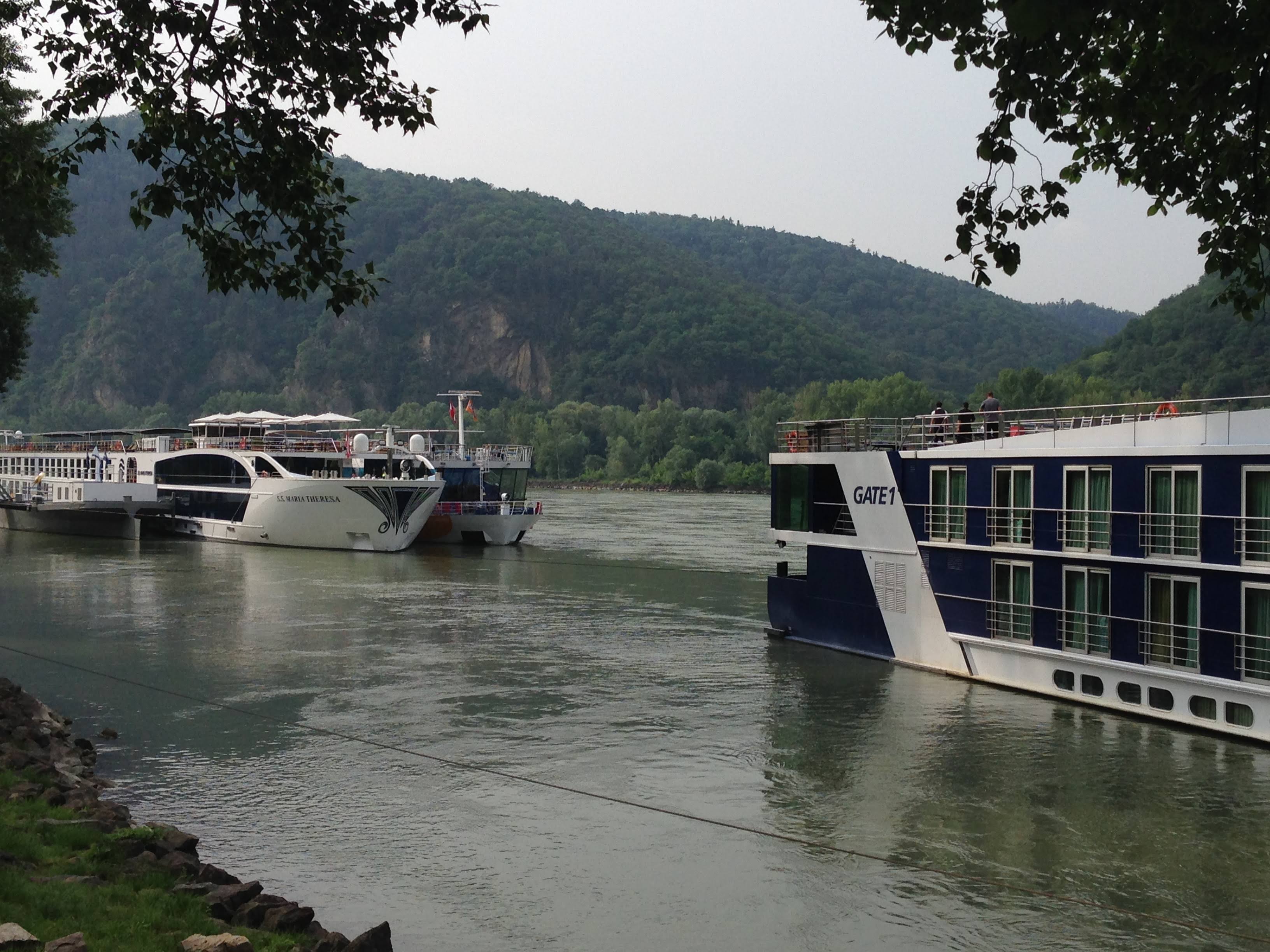
Since we were on a pre-cruise extension with Gate 1, all we had to do was set our luggage outside our rooms by a certain hour, then we were free to do some more exploring, until it was time to report to the coach outside our hotel. The brief bus trip deposited us at our ship, the Monarch Baroness; this is one of the ships that Gate 1 leases, and has had a slight update since we were on it. It was certainly not a new ship, but was comfortable and tastefully appointed. Unlike our recent Emerald trip where the room was very sleek and bright, the Baroness staterooms were more of a traditional decor (sorry about the dark photo; should have waited until we were not next to another ship). A quick Google search will bring up other current Gate 1 ships' interiors, and they all seem to have the same style of decor... not overstated, but also not "Euro" design. I think ours was 165 sq. ft., which is typical for a French balcony room, except Viking’s at only 135 sq. ft. As indicated in my description of a typical river cruise day, you don't spend a ton of time in your room, but the fresh air and light ingress is nice vs. the "swan view" rooms in the bottom of the ship.
Monarch Baroness bathroom
Bathroom was small of course, and many other operators' ships will have the slightly triangular shower (I guess technically a pentagon) that we had; functional, but not as large as the ones on our Emerald or Vantage cruises. Note: the Vantage River Voyager we've been on is now being leased by Gate 1 and sails under the name Monarch Queen. There is also one ship that was purpose-built for Gate 1 - the Monarch Empress; these both have large(r) bathrooms, and my tip would be to try and get on one of those ships if it is possible for your itinerary and schedule.
We were in a cabin second from the back before the gym (which almost no one used). I don't recall any noise from the engines at night, but our room's door did rattle when at sail; we fixed that ourselves by stuffing a face cloth in the jamb at night. We didn't have a choice for category of room, but as with most river cruise ships, the standard panorama "balcony" rooms on the middle and upper deck are the same; a tip to save money would be to purchase Cat D staterooms, as they are typically only $400 more than the bottom level. However, I noticed recently that the handful of Cat D rooms sell out quickly. After the obligatory welcome cocktail reception, the Cruise Director introduced the crew, then went through the basics of river cruising that we've become familiar with, and then we joined our new friends for dinner downstairs.
Meals and dining
Monarch Baroness dining room
The format for the restaurant on our Gate 1 was the same as all the rest of the river cruise experiences we've had. If you got up really early, you could grab a continental breakfast in the lounge; I used to run there in the am for a banana and coffee to kick start the morning. There was a buffet breakfast each morning in the dining room with a number of options, as well as the made-to-order egg and omelette station. I like to nab a muffin or put a slice of cheese and ham into a bun for a mid-morning snack. At lunch, there was again a buffet, and if I recall correctly, a pasta station; beer and wine was an extra cost at this meal. Unlike other cruises we've been on, there was no afternoon snack or high tea service in the lounge mid-afternoon, and only some cookies at the self-serve coffee and tea station. Seating was ad hoc, and there were a number of seating combinations, with mostly tables of 4 or 6 chairs per table. The dress code for Gate 1 is casual, but I like to wear smart casual attire for dinner; some took the casual attire note a little too far, unfortunately. We had "tank top guy" that eventually was requested to up his game, as he stopped showing up in the restaurant wearing it. I've posted my thoughts and tips on packing for European trip here.Dinner was 4 courses each night (with three choices for the main), except on the Captain's farewell dinner night, featuring 5 courses.
4 of 5 courses for Captain's dinner
In general, food quality was great with beautiful presentation, and over-the-top service; we find that we dine better on river cruise ships than we would choose to eat if on our own. I don't recall ever seeing the bottom of my wine glass, and believe you me, I tried! I did find the soups to be a little lacking in substance... sometimes just a light broth or in the case of the Captain's dinner, a "porcini mushroom cappuccino". What we did like however, is that they served a local recipe as one of the options each night (and sometimes at lunch); e.g. goulash in Budapest, Wiener Schnitzel in Vienna, etc. Don't leave the dining room with an empty glass; the servers will be only too happy to send you on your way with your wine glass full!
Tours and excursions
Ships moor close to old town areas
Since we were on the upper Danube, most of the daily excursions were simply a walking tour that embarked right on the edge of the river as you stepped off the boat. However, when a coach was required, Gate 1 had a first-come, first-to-depart procedure. Once the first bus had enough passengers, off it went, and you didn't have to wait for the folks who had to run back to their room for their Quietvox device, or the slowpokes who felt "the bus will wait for us". This did break down on the return trips however, as folks had left their extra stuff on the bus, so we had to wait for these passengers to return prior to leaving. There might have been a slow walkers group, but we never saw them. The local guides were fine; as I have mentioned before, they are going to be the same guides that the Viking and other cruise ships use. Having to make sure that you had some local coins for a tip at the end of each walking tour was a minor inconvenience, but something you needed to be prepared for.
Rest stop Austrian vista
We only opted for one optional tour, which was the day-trip to Salzburg; at $100 each and almost 3 hours coach-ride each way, it was a substantial commitment. But the alternative was to spend the day in Linz, and we felt that we'd have a better time in Salzburg instead. The bus stopped at a beautiful rest stop (think Bavarian restaurant perched on the edge of an Austrian lake surrounded by mountains), breaking up the long drive. We felt that the included lunch at the Abbey took too long, detracting from time we could have spent doing more exploring. And as much as I love schnitzel, I had eaten it twice in the last two days, and would have preferred another option.
Leaving Passau for Regensburg
The only other tour that required a lengthy coach was the Regensburg trip. We were docked in Passau (I think water level was low, otherwise we'd have docked in Regensburg itself), and did a morning walking tour there, and then you had the option to go via coach to Regensburg for the afternoon. After a long day on the bus the day before, we debated not going, but we're glad we did, as Regensburg was one of the highlights of the many cities that we visited. We only sailed during the day once, when we went through the beautiful Wachau Valley. This would be the equivalent to the section of the Middle Rhine, but without all the castles. It was the same day that we visited the postcard-cute town of Durnstein and then Melk Abbey, so it was a nice change versus the big city of Vienna and our following day trip to Salzburg. The one option that we didn't get that is usually featured on other operators, is the Cesky Krumlov excursion, which is supposed to be amazing.
Onboard entertainment
Loot won during evening games
Since this was our third river cruise, we had set our expectations low for evening activities onboard. Unlike other operators who hire a snoozy piano player, or some local folk music band, the Entertainment Coordinator on our cruise was very flamboyant and entertaining all to himself! We would look forward to topping up our wine glasses after dinner and heading to the lounge for an hour and a half of fun games and laughter. This might also have something to do with the average age of the cruisers on our Gate 1 trip; we were still the youngest on board, but would estimate the average age to be in the mid-60s, versus others like Uniworld and Vantage where the average was mid-70s or higher. Similar to those two cruises as well, the guests were mostly American, with a small smattering of Canadians and others; not surprising, given that Gate 1 is a US company.
Disembarkation and Prague post-cruise extension
Powder Tower and Municipal Hall
After disembarkation in Passau, we had a 3-hour coach trip to Prague (with rest stop too), but since it was too early to check in, we were given a brief orientation walk near the Powder Tower and Municipal Hall. Then once we got into our rooms, we freshened up, and we gathered again for the bus tour of Prague. We asked why we were jamming this all into one tiring day, when we had two other full days there; perhaps they've changed this for subsequent travellers? We were essentially on our own for the remaining two days, but we had no trouble filling them with things to do.
The hotel selected for us was the Art Deco Imperial Hotel, which was walking distance to pretty much all the sights in Prague; it was a great hotel, and we would recommend it if you are travelling there on your own. The included breakfast buffet was excellent, and their croissants were amazing! Anyhow, my next tip is to use the Rick Steves Audio Europe App to take a free walking tour of the old town area. You'll hear him tell you things that you didn't get on the Gate 1 tour, and you can pause the tour anytime if you feel like a cold drink or see a shop you'd like to investigate.
Additional fee items & non-inclusions
As indicated earlier, we didn't get free beer and wine with lunch, which wasn't too much of a concern for me, and she doesn't drink alcohol. Update: apparently they are now serving beer and wine with lunch. I can't remember what the à la carte drinks cost, but I believe they were in line with other river cruises we've been on. Wine selection was fine for my palate, but wine snobs might be disappointed in the selection on board; I don't recall an option for premium wines. Tip: I like to try local beers, and would stop at the local supermarket on the way back to the ship to grab a few (at a fraction of the price onboard) when in each new country.
Getting to/from the airport is easy
Gate 1 only includes transfers if you buy your airfare through them; this is common among the other operators except a few (like Emerald) who provide free transfers regardless. However, as we usually like to show up a day or two early to help shake the trans-Atlantic jet lag, the free transfer on arrival is not applicable anyways. This is an important tip: getting in a day or two earlier not only helps you acclimatise, but if there are any unforeseen delays, you still have a good chance of catching your ship at embarkation. Similarly, since you probably want to maximise your European vacation, you'd need to find your own way to the airport after your own post-cruise extension, as an included transfer on the end won't have any value either. Another tip: Gate 1's extensions were included for us, but normally if you are looking at optional pre- or post-cruise extensions, they will be far more expensive with the operator than what you could do on your own.
No free water bottles
You won't be getting any free Gate 1 branded items like backpacks, travel wallets, baggage tags or reusable water bottles; however there will be ample bottled water provided daily in your room. The main thing that you need to be concerned with is tipping, which is outlined in your welcome package email. You will likely need some euros/local currency on your trip, but not a lot, since almost all your dining takes place on board; most stores will take credit cards too. Tip: I find that I can get the best exchange for euros at my home bank, and can even barter a little with the teller, versus the foreign exchange at the airport on arrival. If you're going to use an ATM in Europe, make sure you use one attached to a local bank or clearly branded as one, and not some dodgy one in a pub; always let your home bank perform the currency conversion too.
You'll need to make some minor purchases so that you will have coins available for the onshore local guides as well as public toilets. Bathroom tip: WC facilities will be free at sites like museums and major chain hotels; take off your Gate 1 lanyard, and walk into the lobby like you own the place, and head towards the restaurant or bar to find the bathrooms. For the onboard tipping, we had a strange requirement that the Cruise Director be paid in cash, while the rest of the crew and the Entertainment Coordinator could be added to our final bill; I learned later that this was because the CD was a contractor. This was a minor inconvenience, and they gave us enough notice for us to stop at a bank machine prior to disembarkation day.
One omission on Gate 1 was the lack of bicycles for guest use. However, we found on this Danube itinerary, that there wasn't an opportunity to use them, as our days were filled with activities without needing to do further touring via bicycle. However, for those that are going on say, a Tulips n' Windmills cruise, you'd probably find an afternoon or two where you could have taken advantage of them. We certainly could have used some for Budapest, but we weren't on the boat at that time yet.
Conclusion
As mentioned in other posts, I'm cheap I like to save money, and so Gate 1's tag line of "see more of the world for less" resonates with me. And I might have given you the impression from the previous section that Gate 1 is a no-frills brand, but they're not. You get 95% of the experience that you'd get on say, Viking, for almost half the cost. Sure, apples-to-apples comparisons are hard to do, as most of the time Viking is giving you free or reduced airfare, but if you know what you're doing, you can come up with a reasonable comparison. And as I wrote about before, the friends we met on this cruise that went on a subsequent Viking one, indicated that they preferred Gate 1, and won't sail with Viking again. Based on our four river cruises (Uniworld, Vantage, Gate 1 and Emerald), Gate 1 comes out on top by a small margin. These river cruises aren't light years apart; but depending on what you want to get out of your trip, you might have a different viewpoint. i.e. We are relatively easy-going, and can roll with the punches, so-to-speak. We like the river cruise experience because we unpack once, and get to see a variety of new European places and countries with relative ease; it's a small, boutique hotel and restaurant that floats down the river with you. But if you are the type that is looking for a "cruise experience" foremost, and "where you visit" is a secondary consideration, then you might feel a little underwhelmed by Gate 1; I'd probably suggest Scenic or Tauck in that case.
Recently, we went shopping on a dreary, rainy April Sunday. A rare outing for the two of us, as we are not really shoppers, per se. Well, that's not really true, as I am a shopper, but I normally just choose to do it from the comfort of my leather armchair. Most of the time, I'll just scroll through the listings on FB Marketplace until something catches my eye. But this time, we went to the Metropolis to check out some footwear for her; shoe shopping is the one thing that I don't think can be done well online. Anyhow, while she was off perusing on her own, I came across a blazer that I thought could be a great fit for European travel.
Eddie Bauer Voyager II Travel Blazer
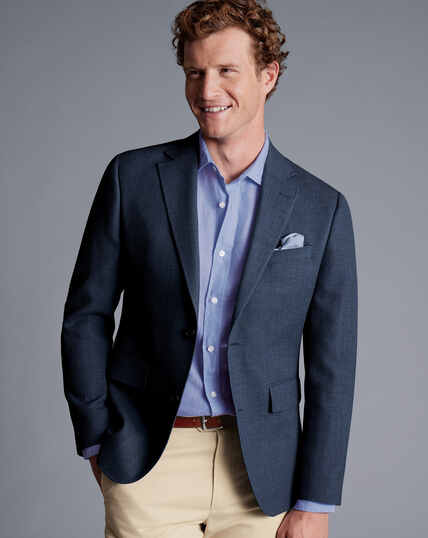
So you might be reading this, and are thinking, why a blazer at all? Well, as is often advocated by others online, it's best to try and blend in a bit when you're in Europe, as it makes you stick out less as a potential target for thieves and pickpockets. And in general, you want to match with your surroundings; you're not going to wear a tuxedo to a restaurant, so why would you wear just a t-shirt either? Sure, things have changed over the years, and Europe isn't the formal attire place that it used to be. You'll read things that say, "men never wear shorts", but in the heat of the summer, I've seen (i.e. heard the foreign accent of) many European men who were wearing fashionable shorts. Runners (referred to as trainers over there) used to be frowned upon. Well, if you haven't noticed, the fashion trend of bright white tennis shoes has been around for quite some time now. But back to the question at hand - why bring a blazer? It's because there is probably no single piece of men's wardrobe more versatile than a plain blue/navy blazer.
Ok, so to be honest, I have (at last count) five navy or blue blazers. But in my defence, I've acquired three or four of them in my quest for the perfect travel blazer, but even though they weren't the ones, I decided to keep them for work as an Extra. A good blazer can be used to dress up a pair of jeans or chinos and t-shirt. You can also make a half-decent dressy look when paired with an Oxford shirt and maybe even a tie. Make it a little more casual by leaving your shirt untucked. With room for a sweater underneath, it can double as outerwear.
In the right material, it might even ward off a sprinkle; flip up the collar to keep the cool evening breeze off your neck. Maybe even worn on the plane if it gets a little too chilly. Some fashion pages will even have them paired with nice shorts... I'm not sure about one however. But with the push these days for one-bag travel, the navy blazer might be the one jacket to to rule them all. Worn on while travelling, it might even help you get into those elusive business class seats up front.
I saw this look in Italy first!
Sure, there will be occasions where bringing a blazer as the only jacket is not the right call. For example, on our last trip, we went to Croatia and Eastern Europe, where it was going to be relatively warm, and we had a more relaxed itinerary. Some days, we would be out hiking around the lakes and waterfalls, and others we'd be out all day exploring a new town. Fine dining was not really on the agenda, so I took a more outdoor-style jacket with a tuck-away hood and a more casual look. Or the times when we went to Europe in the shoulder seasons (April/early May and late Oct./Nov.), when more than one jacket was required; e.g. a real raincoat as well as a mid-layer one. But with a sweater, or even a quilted vest, you can extend the season of the blazer if necessary. Bridging the winter season, I'd probably have to bring two "jackets" as well as mid-layers, but might still be able to get by with carry on by wearing the heaviest layers while travelling.
But what makes a great travel blazer, versus just a regular blazer? Well, the key in my opinion is versatility. Ideally, it would be slightly unstructured; that's what allows it to be used in both casual and slightly more formal settings. With a little less padding in the shoulders and without the stiffness created by the canvas basting, you can adapt the blazer to a wider variety of options. Too little structure and fabric choices like nylon make the garment into really just a nice looking piece of outerwear, which cuts down on its utility. Like the discontinued Victorinox one pictured right, which reviewers say is too flimsy to hold its shape and not enough like a true blazer. You see the amazing pictures online, and you want to love it, but the reality is that it won't look like that in person. The also discontinued Lululemon New Venture blazer has the right material to be a good candidate; except for a strange front pocket design and snaps instead of buttons, it could have been a possible alternative.
While it's nice to have a full lining normally in a blazer, having less material makes it more lightweight and easier to pack (if required). Not patterned ideally, but maybe a bit of texture to the weave so as to not look too formal; navy blue is a little more versatile than black, in my opinion. I've recently discovered the value of 4-way stretch fabrics, and if you can find a blazer made with this, you'll appreciate the enhanced mobility and comfort. Wrinkle-resistant is an obvious requirement for travelling, and there are blazers now that can be machine-washable, which is a huge bonus. You're not going to go out in the pouring rain in only a blazer, but a water-repellent one would certainly be a nice-to-have.
I didn't used to worry about security too much, but for our upcoming trip to Paris, it would be great if it had at least one inside zippered pocket. I started my search originally with the Eddie Bauer travel blazer, of which there have been a few different versions. Like the Victorinox one, it looks great in the photos, but trust me, it doesn't wear like that when trying on in the store; the material is too light and it doesn't "hang" very well; it's as though it is designed for hot, humid destinations. I've probably looked at a dozen different brands, but for one reason or other, they did not fit the bill. Some are better outerwear items than others, and there are many that are beyond my budget range.
Well, as I had mentioned at the start of this post, I found it. The almost perfect travel blazer by Perry Ellis. A lightweight, wool/spandex blend blazer with all of the above; bonus that it was on clearance AND further markdown! It even comes with a little 8" x 11" bag that it folds up into. But what would have made it perfect? The addition of a zip-in placket or bib that would make the blazer more adaptable to blustery or cooler evenings. I also saw a gentleman on our last river cruise whose blazer had a hood that zipped off, where the zipper was hidden when the collar was down, but that's probably too much to ask. But if it does get cool enough where one button isn't enough, I'm hoping that I'll have brought a quilted vest to pair with this blazer.
Originally started as an internal blog site at my former employer, here you will find miscellaneous ramblings from an ex-electrical engineer, retired from a 30-year sales and marketing career in the tech sector.
Now spending my time travelling and working on other hobbies such as woodworking, photography and being an extra in the TV and film industry here in Vancouver.
I am not a travel agent, but often post travel deals (mostly river cruises) that I come across on my FB page; click on the follow button above if you would like updates to that page. You do not need to "friend" me in order to send me FB messages either.